
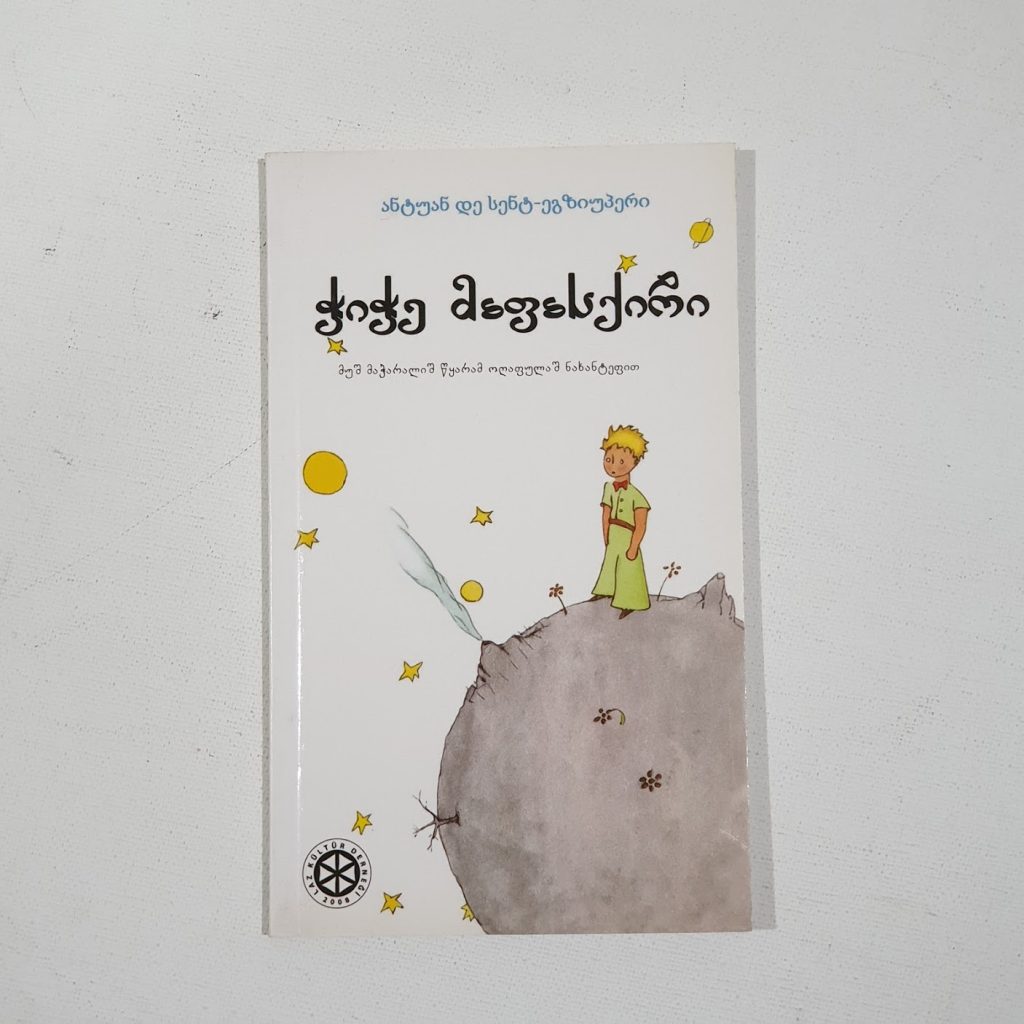
ჭიჭე მაფასქირი / Chiche Mapaskiri — in Mingrelian / Megrelian / მარგალური ნინა.
Mingrelian (მარგალური ნინა, margaluri nina) is a Kartvelian language, forming the Zan branch alongside its closest and only mutually intelligible relative, Laz (ლაზური ნენა, lazuri nena), the two remaining a single Zan tongue until geography and history pulled them apart within roughly the past five hundred years. Its tie to Georgian (ქართული ენა, kartuli ena) runs far deeper in time, the two parting company in the first millennium BC or earlier, so that the pair are true sisters rather than mother and daughter, whatever the common Georgian habit of treating Mingrelian as a merely colourful dialect.
Mingrelian speakers are concentrated in Samegrelo (სამეგრელო), the low country of western Georgia around the Rioni and Enguri rivers, once the heartland of the Principality of Mingrelia, locally called Odishi, ruled from 1557 by the House of Dadiani, whose princes governed first as vassals within a fractured Georgian political world and, from 1803, as vassals of the Russian Empire, until Russia abolished the principality outright in 1867 and deposed its last prince, Niko I Dadiani. Despite this long political distinctness, Mingrelian never developed a literary tradition of its own. Its speakers, who consider themselves simply Georgian, have for centuries reserved Georgian for church, school and print, keeping Mingrelian for home and field, so that the very idea of writing it down still strikes many Mingrelians as faintly transgressive, a departure from what the language is understood to be for.
Where Mingrelian is written at all, it borrows the Georgian Mkhedruli alphabet outright, extended with three extra letters, ჲ, ჷ and ჸ, to catch sounds Georgian itself has no need of; its five vowels and its layered contrast of aspirated, ejective and voiced consonants echo the very architecture found in Georgian and Svan, marking the whole Kartvelian family as one linguistic household even where mutual understanding fails between its branches. That failure is nearly total outside the Zan pair: a Mingrelian speaker can follow Laz across the Turkish border with some effort, yet follows Georgian barely at all without learning it separately, as nearly every Mingrelian has done since early childhood. The result is a language with no reliable speaker count, estimates wavering between three and five hundred thousand, and a UNESCO listing as definitely endangered, kept alive today less by any institution than by sheer unbroken habit around the family table.