
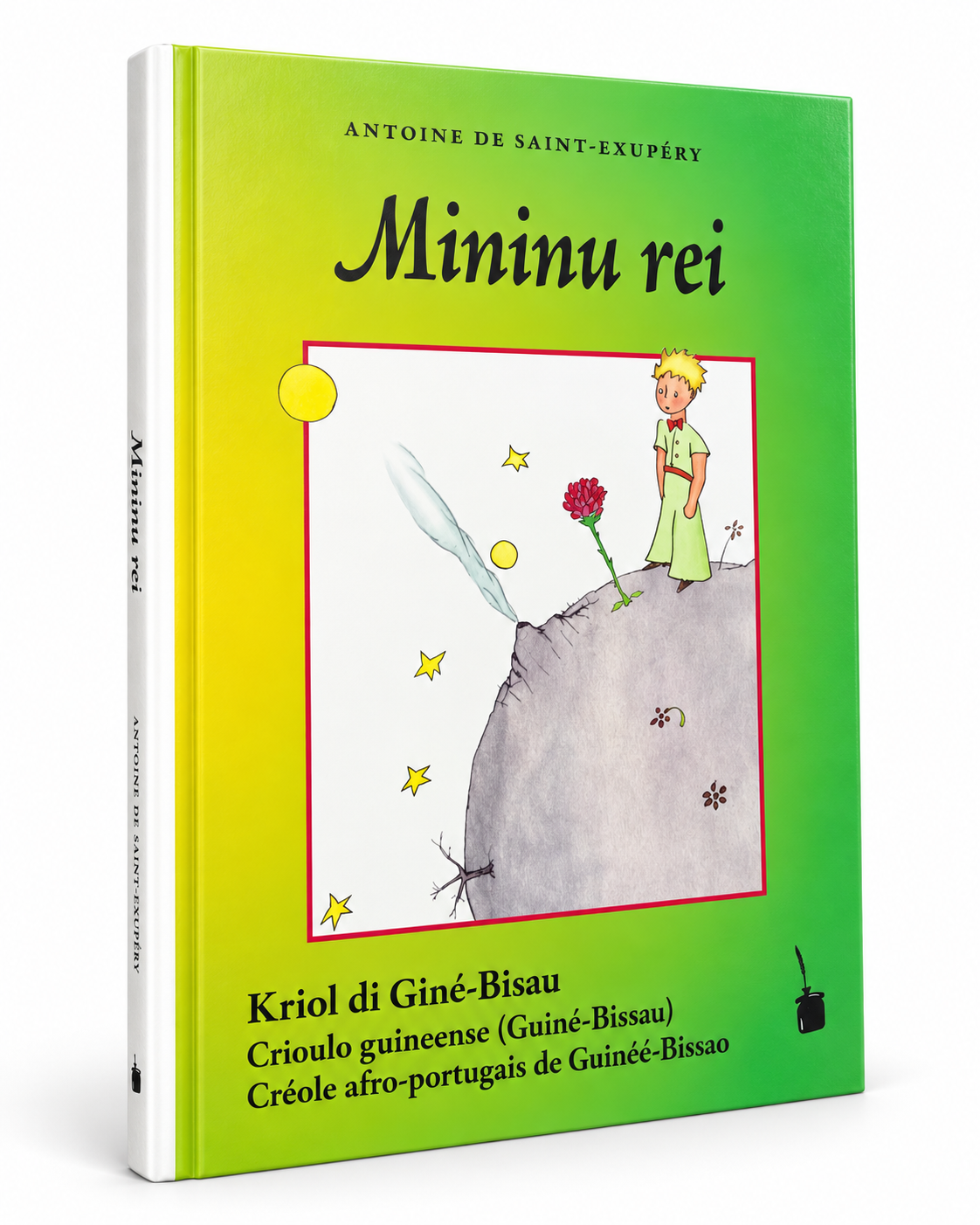
Mininu Rei — in Guinea-Bissau Creole.
Guinea-Bissau Creole (Kriolu, often simply called Kriol by its own speakers) is a Portuguese based creole language and the great unifying voice of Guinea-Bissau, spoken as a second language by the overwhelming majority of the population and, increasingly in the capital Bissau, as a first language in its own right. What makes it so remarkable culturally is precisely this unifying role, for Guinea-Bissau is home to a striking mosaic of distinct peoples, the Balanta, Fula, Mandinka and Papel among many others, each with their own mother tongue, and Kriolu is the shared thread that lets them speak comfortably across those lines without any one ethnic language claiming dominance over the rest.
Its roots stretch back to the fifteenth century, when Portuguese traders and mixed Luso African communities settled along the Upper Guinea coast, establishing outposts such as Cacheu and Bissau itself where Portuguese vocabulary gradually fused with the grammar and rhythms of local West African languages to produce a genuinely new tongue. In this Kriolu is closely related to Cape Verdean Kriolu, its sister creole born of the same Atlantic trading world just off the coast, the two forming part of a wider Upper Guinea Creole family that also extends into the Casamance region of neighbouring Senegal, a linguistic inheritance that quietly outlasted the empires that first brought it into being.
What sets Guinea-Bissau’s Kriolu apart most strikingly, however, is the political weight it came to carry in the twentieth century, when the independence leader Amílcar Cabral and his movement, the PAIGC, deliberately championed it as the language of national liberation, choosing it over both the coloniser’s Portuguese and any single indigenous tongue precisely because it belonged fully to no one ethnic group and so could belong, symbolically and practically, to everyone. That deliberate choice still shapes the language’s identity today, a creole whose vocabulary bears the unmistakable imprint of Portuguese yet whose underlying grammar and everyday soul remain thoroughly, proudly West African.