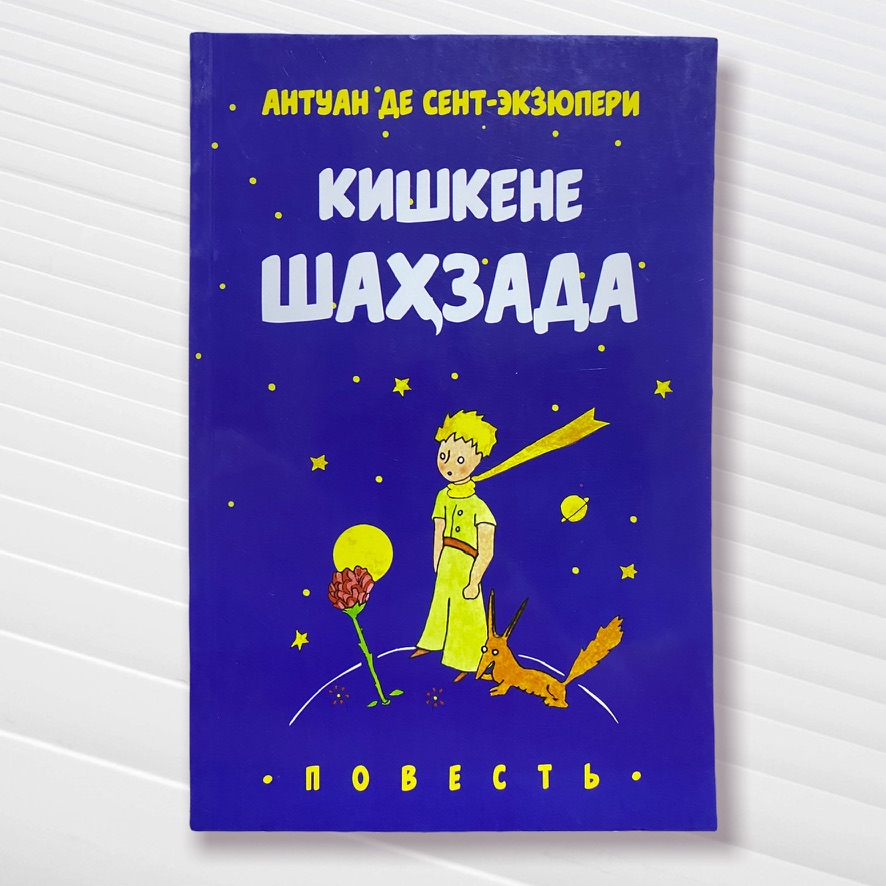
Кишкене Шаҳзада / Kishkene Shahzada — in Karakalpak Language, both in cyrillic (above) or in latin (below).
I’ve just got some new great friends from Karakalpakstan, an autonomous republic that is currently part of Uzbekistan. Two of them are Moldir Purkhanova and Jetes Dauletbaev. They contacted the Karakalpak translator of this book, Gúlnara Ibragimova. Gulnara gave the books, in cyrillic and latin editions to me; and Moldir & Jetes arranged to send the books to me. What a generous and kind people there in Karakalpakstan !
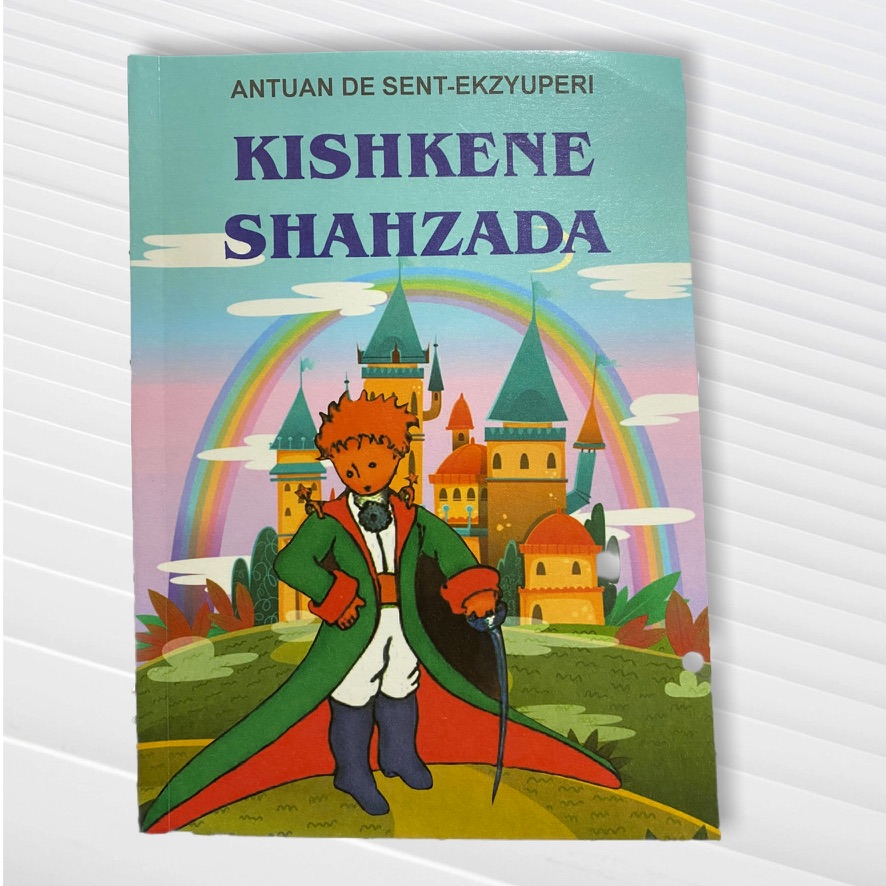
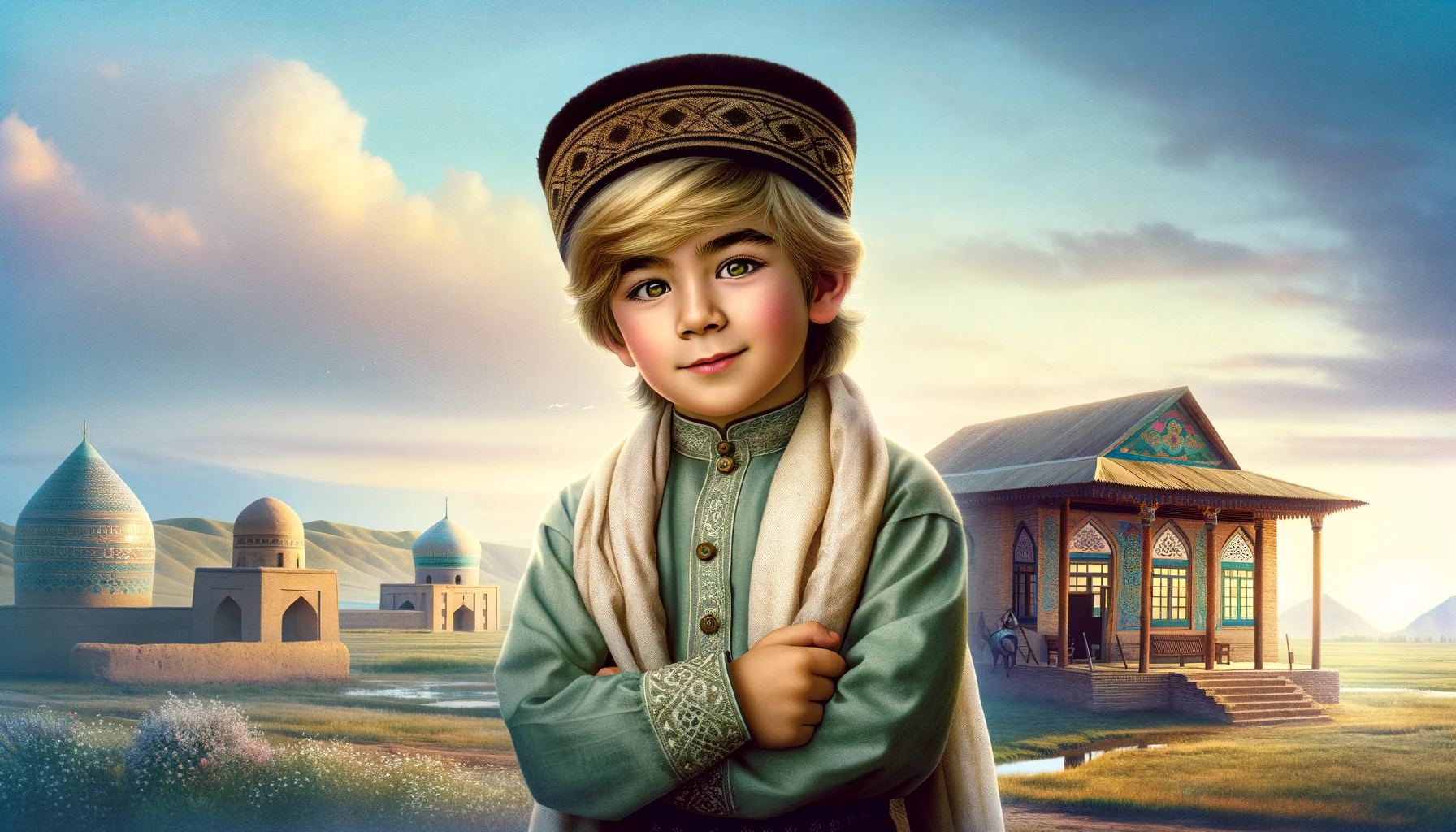
Karakalpak / Qaraqalpaq tili / Қарақалпақ тили / قاراقالپاق تىلى belongs to the Kipchak Nogai subgroup of the Kipchak branch of the Turkic family, placing it in close kinship with Kazakh and Nogai, and it is spoken by the Karakalpak people across the delta lands where the Amu Darya river once poured into the Aral Sea, today gathered in the autonomous republic of Karakalpakstan within western Uzbekistan. The people’s very name, meaning black hat after the distinctive dark headwear once worn by their forebears, points to their identity as a once nomadic steppe people who settled where the open grasslands met the fertile, ancient Khorezm oasis, a meeting point that has shaped their language and culture ever since.
That borderland position placed the Karakalpaks for centuries within the orbit of the Khanate of Khiva, absorbing influences from the settled, Persian tinged culture of the oasis even while retaining the steppe Kipchak Turkic speech of their nomadic ancestry. The twentieth century then dealt this small nation one of the cruellest environmental blows in modern history, when Soviet planners diverted the Amu Darya and Syr Darya rivers to irrigate vast cotton fields, causing the Aral Sea itself, upon which Karakalpak fishing communities had depended for generations, to shrink catastrophically, leaving behind the now famous rusting ship graveyard at Moynaq as a haunting monument to a vanished sea and a transformed way of life.
Linguistically Karakalpak remains close enough to Kazakh that the two are often substantially mutually intelligible, yet it preserves its own proud literary tradition, most strikingly in the epic Forty Girls (Qyrq Qyz), a sweeping oral epic celebrating a band of warrior maidens who defend their homeland, a theme of female heroism unusually prominent within the wider canon of Turkic epic poetry. Like its neighbour Uzbek, the language has been passed through Arabic, Latin and Cyrillic scripts across the upheavals of the last century, and is now edging back towards Latin once more, a small but telling sign of a people who, having weathered the loss of their sea, continue quietly reshaping their language for the future they choose.
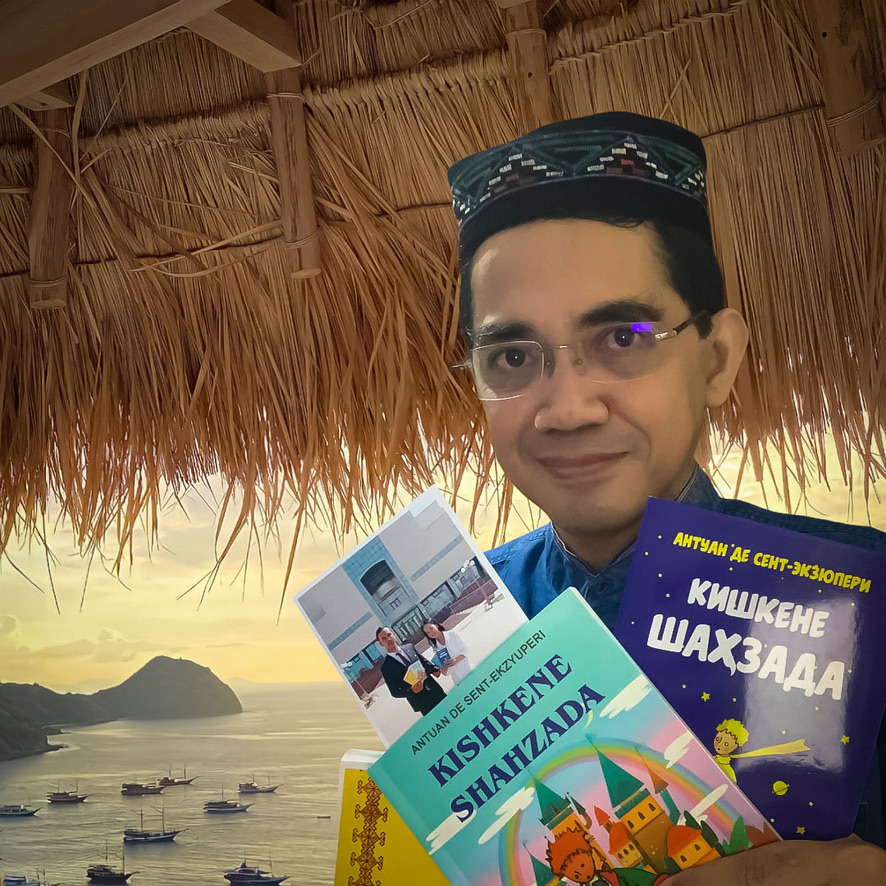
Here’s a picture of yours truly after receiving the books from Gulnara via Moldir and Jetes. They also send me a black hat — the identity from where the Karakalpaks take their name of their country. The picture in picture is Moldir (right) and Jetes (left).