
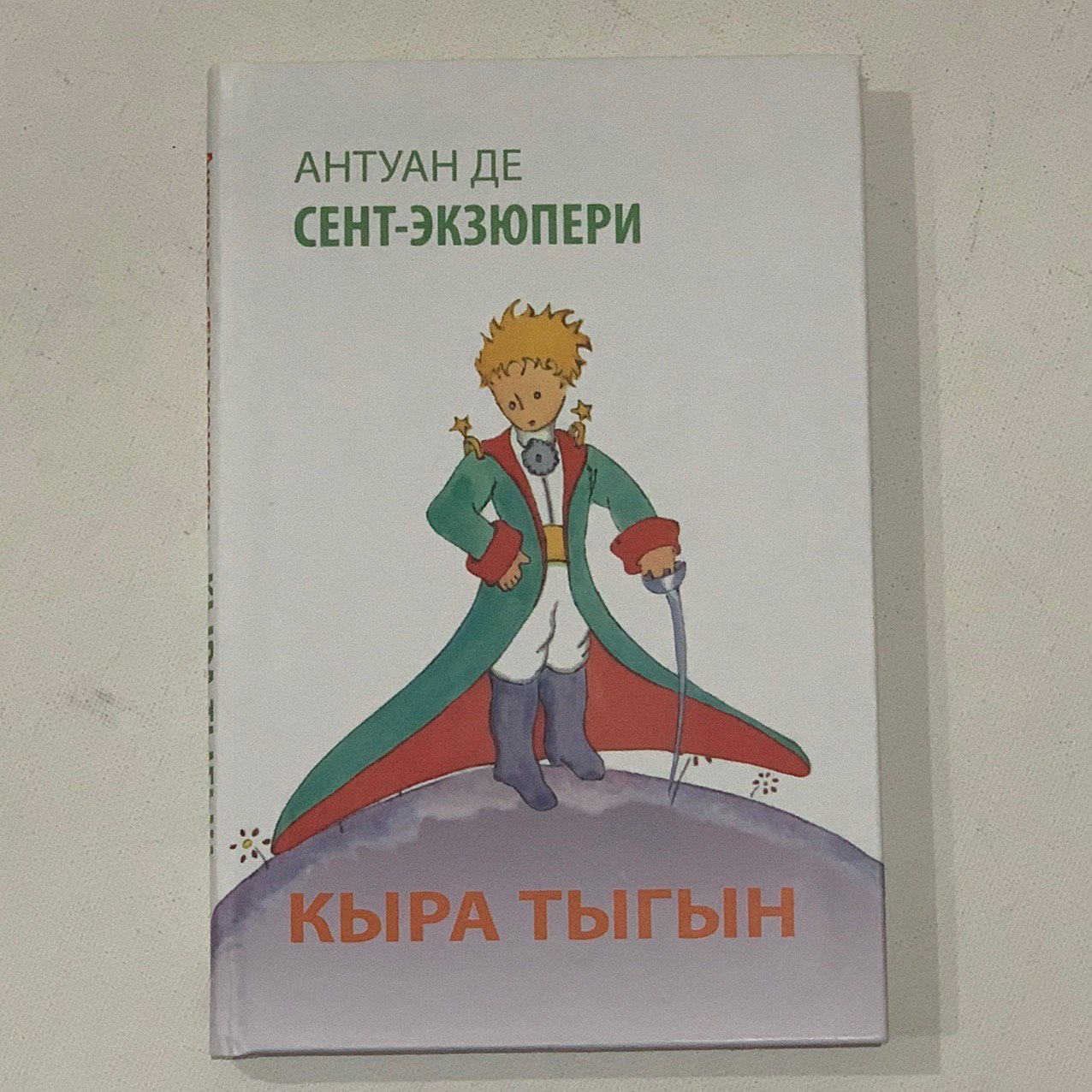
Кыра Тыгын / Kyra Tygyn — in Sakha language.
Sakha (Саха тыла, Sakha tyla), often still called Yakut in older scholarship, is spoken across a landmass so vast that it beggars belief: the Sakha Republic (Саха Өрөспүүбүлүкэтэ, Sakha Öröspüübülükètè), covers roughly three million square kilometres of Siberia, making it by far the largest federal subject in the Russian Federation, larger than India, yet home to under a million Sakha speakers scattered thinly across permafrost taiga and tundra. What makes the language remarkable from the very first glance is where it sits within the Turkic family: it forms, together with its close sister Dolgan, its own separate branch, so isolated linguistically that even other Turkic speakers, Turkish, Kazakh, or Uzbek among them, find it almost wholly unintelligible. Centuries of separation from the main Turkic heartlands, coupled with deep and sustained contact with neighbouring Tungusic and Mongolic peoples, left Sakha bristling with borrowed vocabulary and grammatical quirks unknown elsewhere in the Turkic world, so that specialists sometimes debate whether to treat it as an outlying cousin or almost a language apart that merely kept a Turkic skeleton.
The people themselves, the sakha (саха), trace their ancestry to Turkic pastoralist groups who once lived far to the south, most plausibly near Lake Baikal, and who were pushed northward during the tumultuous centuries of Mongol expansion between roughly the thirteenth and fifteenth centuries. In one of history’s more astonishing feats of cultural adaptation, a people whose horse and cattle breeding traditions were built for open steppe grassland carried those same practices into the coldest inhabited region on Earth, the area around Oymyakon and Verkhoyansk, where winter temperatures plunge below minus sixty degrees Celsius. Their name in Russian, Yakut, is generally thought to derive from an Evenki exonym rather than anything the Sakha called themselves, a reminder of how thoroughly the encounter with Tungusic reindeer herding and hunting peoples, and later with Russian settlers arriving from the seventeenth century onward, shaped both the people’s history and their tongue. Russian loanwords now sit comfortably beside ancient Turkic roots, while older layers of vocabulary drawn from Evenki and Even record centuries of trade, rivalry, and intermarriage across the taiga.
Linguistically the language is a delight of its own logic: it preserves an elaborate system of vowel harmony and vowel length, distinguishing short and long vowels and a set of falling diphthongs that give spoken Sakha its distinctive rolling, musical quality, and its Cyrillic based alphabet, devised in the early twentieth century by the scholar Semyon Novgorodov, had to be fitted with extra letters to capture sounds the standard Russian alphabet could never hold, among them Ҕ ҕ, Ҥ ҥ, Ө ө, Һ һ, and Y y. Culturally the language is inseparable from the Olonkho (Олоҥхо), a vast heroic epic tradition performed in a distinctive sung recitative style and recognised by UNESCO as a Masterpiece of the Oral and Intangible Heritage of Humanity, and from the Ysyakh (Ыһыах), the great summer solstice festival at which Sakha communities gather in white ceremonial dress to honour the sun, drink fermented mare’s milk called kumys, and keep alive a worldview rooted in shamanic cosmology even amid modern Siberian life. Taken together, the language stands as a striking case of a Turkic tongue that travelled further from its origins, geographically and linguistically, than almost any other, and thrived regardless.