

Ница Принцэ / Nitsa Printse — in Udege language.
Udege (удиhе, udihe) belongs to the Tungusic family, and its very name is barely older than a century: coined in 1901 by a Russian ethnographer as a single label for scattered river named groups, Samarga, Anyuy, Khungari, Bikin, Khor, who until then had no shared self designation at all, each simply calling itself after the water it lived beside. Its closest kin is Oroch, so close that the two form something more like a single continuum than two neatly separate tongues.
Life in the Sikhote Alin taiga turned on hunting with bow, ben, and spear, gida, and on sable trapping, which grew commercially important from the 1870s onward under a conservation ethic that forbade taking more game than a family actually needed. Animism ran through it all: hunters sought the favour of the Taiga Host before setting out, and the Sable Master, Nyuko Azani, was believed to withhold his catch from anyone who skinned an animal carelessly. Above every other creature stood Amba, the Amur tiger, revered as a powerful spirit rather than mere prey and never hunted by tradition, a reverence Udege elders still voice today. This world produced the celebrated taiga guide Dersu Uzala, companion to the explorer Vladimir Arsenyev from 1902, whose life became first a book and then, in 1975, an Oscar winning Akira Kurosawa film; Dersu told Arsenyev he was Nanai, yet his clothing, speech and customs struck later observers as Udege instead, so that even his people remain, fittingly, part of the forest’s own mystery. Soviet policy then dealt the language a harsher blow: a Latin alphabet devised in 1931 was banned within seven years, its books gathered and burned, a rupture from which written Udege never fully recovered.
Barely a few hundred of some 1,325 ethnic Udege still speak it today, divided between a Bikin based and a Khor based Cyrillic spelling that only replaced the destroyed Latin script decades later. Its vowels come in five distinct grades, short, long, diphthongal, glottalised and aspirated, the last two born from the historical loss of consonants once standing between vowels, all held together by strict vowel harmony. Set deep among its close Tungusic cousins Oroch and Nanai, whose vocabulary has drifted freely into Udege along the Bikin, and near the coastal isolate Nivkh besides, Udege stands as one of the smallest and most tightly drawn threads in the Amur basin’s crowded weave of taiga languages, its survival now measured less in speakers than in the handful of elders still willing to teach the forest’s old names for things.
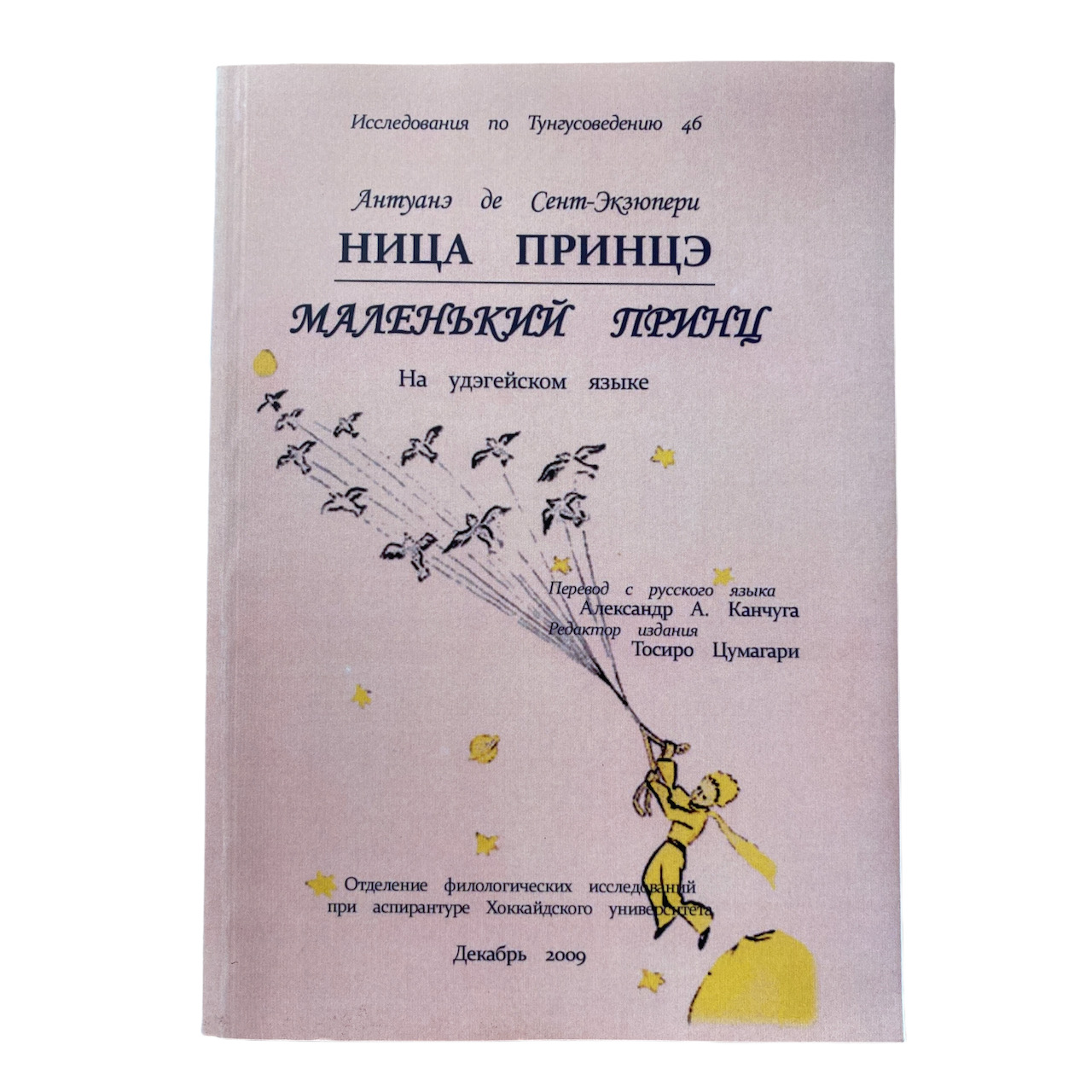
Download the PDF file here: [LINK]