
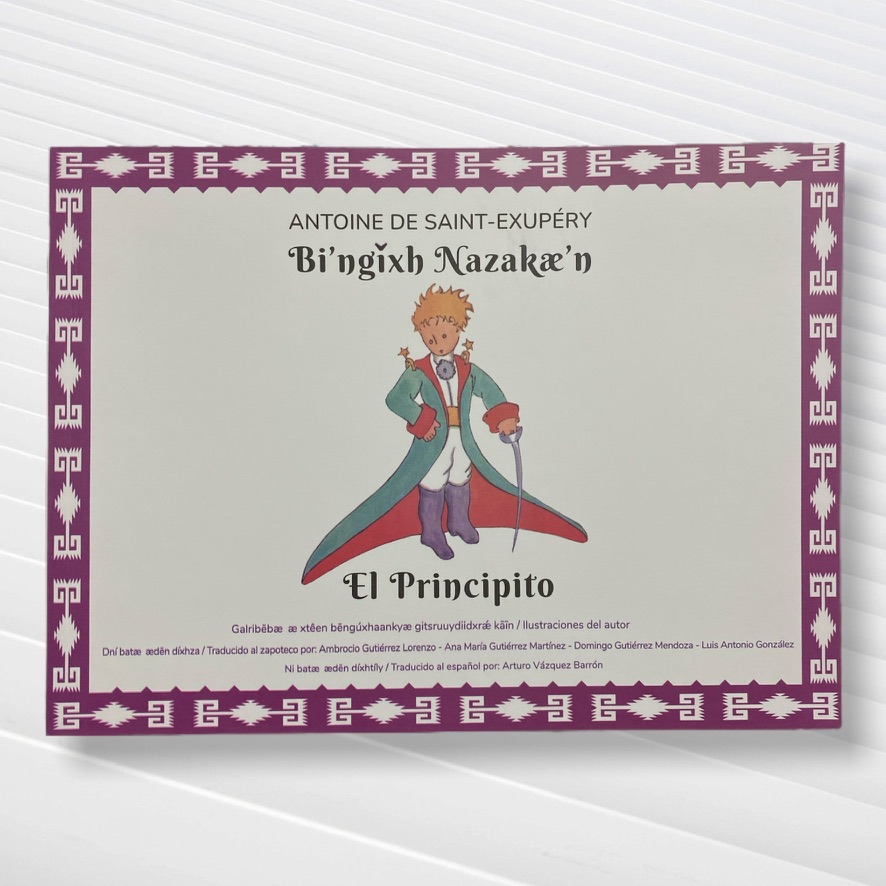
Bi’ngixh Nazakæ’n — in Zapotec language.
Zapotec, called by its own speakers Binnizá, people of the clouds, and its speech Diidxazá in the Isthmus or Didxsaj at Mitla, belongs to the Zapotecan branch of the Oto-Manguean family, sister only to the smaller Chatino languages nearby. What outsiders treat as one language is, on closer inspection, a close knit family in its own right, its internal divergence deep enough, by some estimates comparable to that between the Romance languages, that the Mexican state now officially recognises some sixty distinct Zapotec languages, several mutually unintelligible even between villages a short walk apart.
That civilisation left behind one of the earliest writing systems anywhere in the Americas. At San José Mogote a carved stone known as the Danzante, older than 500 BC, bears drops of blood beside what may be the calendar name 1 Earthquake, among the first securely dated glyphs in Mesoamerica, earlier than much of Maya writing itself. Once Monte Albán rose to dominance the practice flourished further: more than three hundred Danzante stones, most portraying captured or sacrificed rivals, and the forty odd conquest slabs of Building J, recording places and peoples brought under Zapotec rule, together with calendrical and personal names carved in a logo syllabic script that endured until around 700 AD before falling silent, feeding by most accounts directly into the writing later developed by the Mixtec and the Aztec.
Every variety of Zapotec is tonal, layering three level tones and additional contour tones over syllables in the north and a leaner two level system further south, while also distinguishing plain, laryngealised, breathy and checked vowel qualities that most outsiders never learn to hear at all, a phonological richness matched by remarkably few other language families on earth. Genetically Zapotec stands apart even from its nearest Oaxacan neighbour Mixtec, itself Oto-Manguean but from an entirely different branch, let alone from the wholly unrelated Uto-Aztecan Nahuatl once spoken by the Aztec state; yet centuries of shared Mesoamerican life bound all three, and many others besides, into a single linguistic area, trading grammatical habits and turns of phrase across their family boundaries much as neighbouring nations trade goods. Nearly half a million people still speak some form of Zapotec by the last census, a figure that sounds reassuring until set against its extremes, from the seventy thousand speakers of Loxicha Zapotec down to the single remaining speaker recorded for San Agustín Mixtepec, a reminder that Binnizá is not one language teetering on an edge but dozens, each with its own distance left to fall.