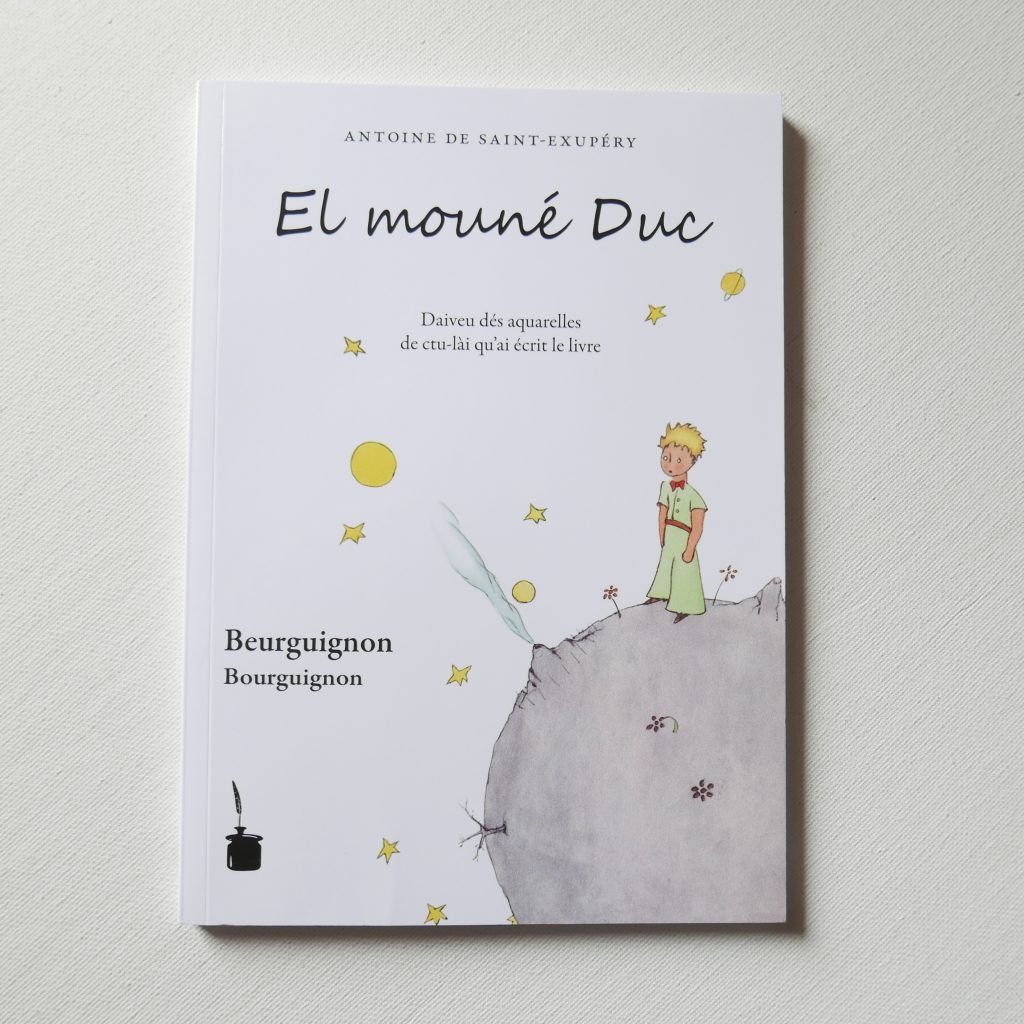
El Mouné Duc — in Bourguignon.
Burgundian (Bourguignon) belongs to the Oïl branch of Gallo Romance, a sister tongue to French, Walloon, and Picard; and it is native to Burgundy in east central France, a region whose very name still carries the memory of the Burgundians, an East Germanic people who migrated south from the Baltic in late antiquity and settled here as conquerors, only to see their own Germanic speech gradually dissolve into the Vulgar Latin of the population they ruled, leaving behind nothing of their original tongue but the name still worn today by a thoroughly Romance language.
That inherited name went on to crown one of the most extraordinary political creations of medieval Europe, for the Duchy of Burgundy under its Valois dukes grew, by the fifteenth century, into a dazzling power that ruled not only Burgundy but also the wealthy Low Countries, rivalling the French crown itself in riches and ambition until the sudden death of Charles the Bold in 1477 saw the duchy reabsorbed into France while its northern territories passed instead to the Habsburgs. It was precisely this Burgundian court, spanning French speaking Burgundy and Dutch speaking Flanders together, that patronised the astonishing flowering of Early Netherlandish painting, employing masters such as Jan van Eyck, so that a regional Oïl tongue found itself, quite unexpectedly, at the political and cultural heart of one of the great artistic revolutions in European history.
Linguistically Burgundian occupies a genuinely transitional position within France, sitting where the Oïl languages of the north gradually give way to the Franco Provençal speech of the south and east, absorbing certain southern traits while remaining firmly Oïl at its core, and even preserving here and there small lexical fossils traceable back to that original Germanic Burgundian tongue, faint linguistic echoes of conquerors long since assimilated. Today the language survives mostly in memory and local song, quietly overshadowed in the wider world by the very name it shares with Burgundy’s celebrated wines, yet it remains a living reminder that this small, proud region once stood, briefly and brilliantly, as a rival to kingdoms.