
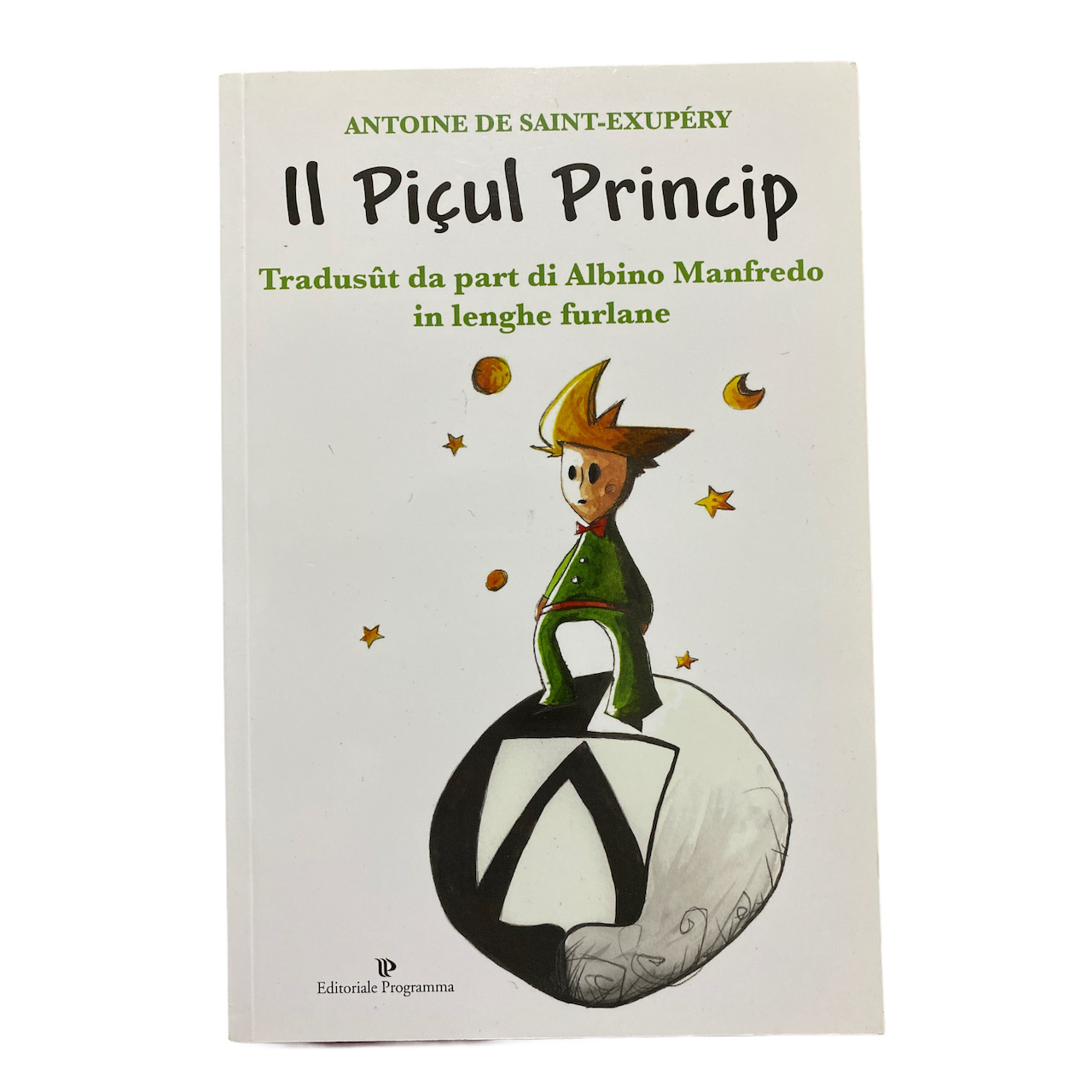
Il Piçul Princip — in Friulian, a Romance language belonging to the Rhaeto-Romance family, spoken in the Friuli region of northeastern Italy.
Friulian (Furlan) belongs to the Rhaeto-Romance group of Romance languages, standing alongside Ladin of the Dolomites and Romansh of Switzerland as one of three surviving descendants of the Latin once spoken across the Alpine arc. It is the native tongue of Friuli, the historic region of far north eastern Italy that stretches from the Adriatic shore up through gentle plains towards the Carnic Alps and the borders of Austria and Slovenia, a geography that has always placed Friulian speakers at a genuine meeting point of Latin, Germanic and Slavic worlds.
That position was given lasting political form by the remarkable Patriarchate of Aquileia, an unusual ecclesiastical state ruled for more than seven centuries by prince patriarchs who governed Friuli with real temporal power quite apart from the rest of Italy, allowing the local Romance speech to develop its own distinct character largely undisturbed by outside standardisation. Venetian rule followed the Patriarchate’s decline, and the region was later split for a time between Italian and Habsburg administration, so that Friuli only joined a unified Italy in stages, the western areas in 1866 and Trieste and its surroundings only after the First World War, a comparatively late and layered political history that left the language space to mature on its own terms.
That independence found its most celebrated literary expression in the young Pier Paolo Pasolini, who chose to write his earliest poetry not in Italian but in Friulian, drawing on the peasant world of his mother’s home village of Casarsa to give the dialect an unexpected place in twentieth century Italian letters. Today Friulian holds official recognition as a protected minority language, sustaining its own press, broadcasting and schooling, and while it shares certain deep Latin retentions with its Alpine cousins Ladin and Romansh, centuries of separate political fortune have left each of the three Rhaeto-Romance languages a genuinely distinct and proudly self standing tongue.