
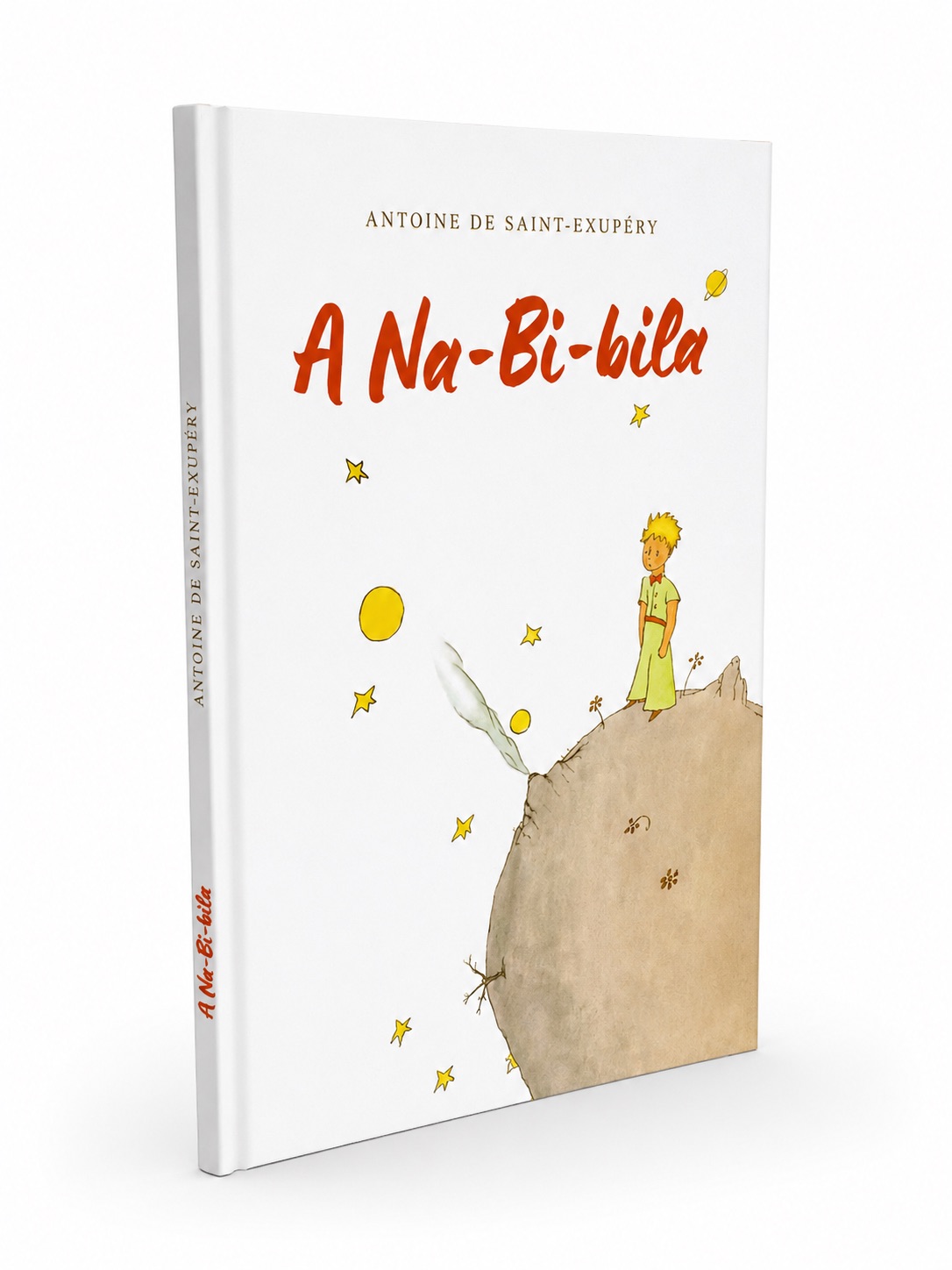
A Na-Bi-Bila — in Mooré language.
Mooré, Mòoré, More, or Mossi, is the language of the Mossi people of Burkina Faso, and by any measure one of the most significant languages of West Africa. With somewhere between eight and ten million speakers, it ranks among the most widely spoken languages on the continent that lack official national status, a situation common across the Sahel where colonial-era French retains its administrative primacy regardless of demographic reality. Mooré belongs to the Gur branch of the Niger-Congo family — also called Voltaic, after the Volta river system that drains much of the region — a group of some seventy languages spread across Burkina Faso, northern Ghana, northern Togo, northeastern Côte d’Ivoire, and southwestern Mali. Within Gur, Mooré’s closest relatives include Frafra and Dagaare spoken across the border in northern Ghana, and more distantly Dagbani, Gurma, and Buli — languages that share Mooré’s characteristic noun class system, its tonal structure, and its broadly verb-final tendencies, whilst diverging enough in vocabulary and phonology to be mutually unintelligible. The language is also in long-standing contact with its neighbours beyond the Gur family: with Mande languages such as Dyula to the west, with Hausa to the east — the great vehicular language of the Sahel — and with French, which saturates the formal register of Burkinabè public life whilst leaving the domestic and communal entirely to Mooré.
The Mossi people built one of the most durable political structures in West African history. The Mossi kingdoms — centred on Ouagadougou, Tenkodogo, and Yatenga — emerged in the eleventh and twelfth centuries and maintained their political coherence and territorial integrity for nearly eight hundred years, resisting incorporation into the great Sahelian empires of Mali and Songhai that rose and fell around them. The Mogho Naaba — the paramount chief of Ouagadougou — remains an institution of enormous moral authority in contemporary Burkina Faso, consulted during political crises and capable of drawing crowds of tens of thousands. This institutional continuity is unusual in the region and has contributed to a Mossi cultural self-confidence that permeates the language itself: Mooré is spoken with no particular sense of apology or inferiority relative to French, and in the markets, compounds, and mosques of Ouagadougou it is simply the language of ordinary life. The Mossi are predominantly Muslim, the faith having spread through the region from the fifteenth century onward via the Hausa and Mande trading networks, but the Islam of the Mossi has historically been syncretic and accommodating — layered over pre-Islamic ancestral religion in ways that remain culturally productive today.
Linguistically, Mooré is a tonal language with two primary tones — high and low — that are phonemically distinctive, meaning that the same sequence of consonants and vowels can carry entirely different meanings depending on the pitch at which they are delivered. This feature, shared with most Niger-Congo languages, poses particular challenges for literacy education and for translation, since standard orthographic systems must either mark tones explicitly — a practice that produces texts forbidding to the uninitiated — or leave them unmarked and rely on context, which works well for fluent speakers but poorly for learners. The Mossi writing tradition is relatively recent, developing primarily in the twentieth century through missionary and post-independence literacy efforts, and the standardisation of Mooré orthography remains an ongoing project. The language has a rich oral tradition of proverbs, praise poetry, and historical narrative — the zaksoamba, the traditional recitations of court praise-singers, constitute a sophisticated literary form with their own conventions and registers — but the transition to written literature has been gradual and uneven, making translations of international works into Mooré all the more significant as acts of literary legitimation.
The surrounding linguistic landscape of Burkina Faso is one of extraordinary complexity: the country contains some sixty-odd languages across several unrelated families, making it one of the more polyglot societies in a notably polyglot continent. Beyond Mooré and the other Gur languages of the north and centre, the west of the country is dominated by Mande languages — principally Dyula, the great trade language of the western Sahel — whilst the southeast contains Gulmancema and other Gurma languages. French sits atop this entire structure as the language of state, education, and formal economy, understood by a minority and used comfortably by fewer still. In this context, the relative dominance of Mooré is a function not of any official status but of sheer demographic weight and the political prestige of the Mossi kingdoms: it functions as an informal vehicular language across much of the country, understood and spoken by many whose mother tongue is something else entirely. The relationship between Mooré and French in Burkinabè daily life is one of constant code-switching — the same conversation will move between the two languages several times within a single exchange — producing a hybrid communicative culture that is neither purely Sahelian nor purely Francophone but distinctively and irreducibly Burkinabè.