
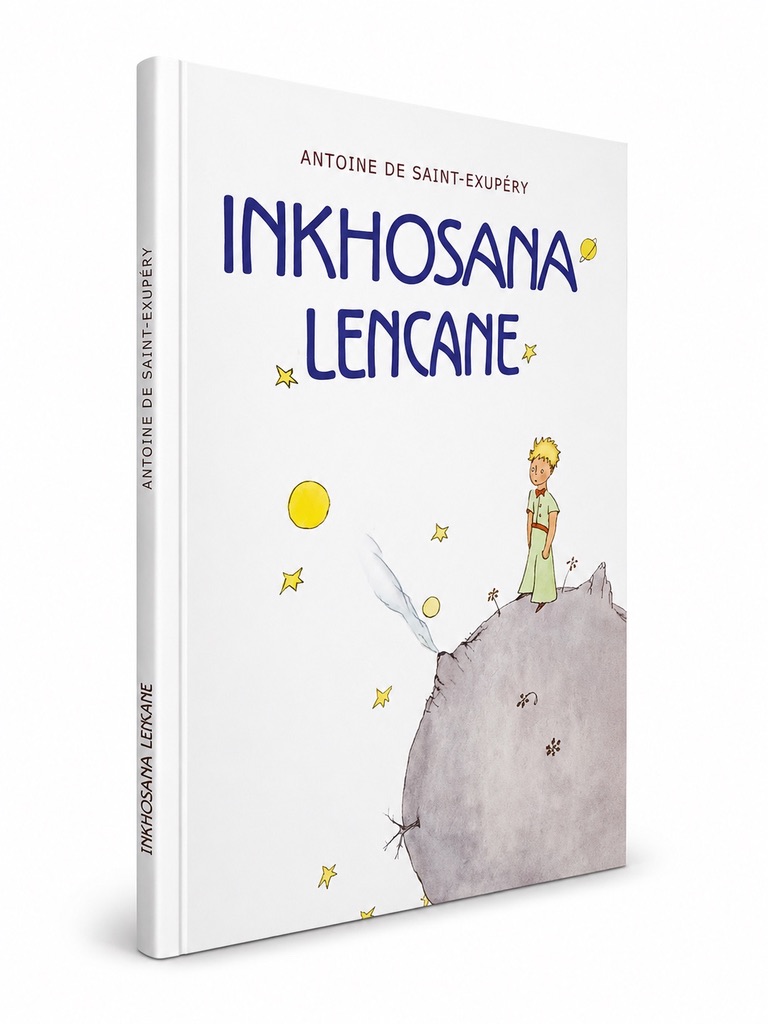
Inkhosana Lencane — in Swati language
Swati or siSwati belongs to the Nguni branch of Bantu, in the Tekela subgroup, and its own name performs, in miniature, the very sound change that defines that subgroup: what Zulu speakers call Swazi is, in the language’s own Tekela mouth, Swati, since Tekela languages consistently render as /t/ what the neighbouring Zunda languages, Zulu, Xhosa and the various branches of Ndebele among them, pronounce instead as /z/. Set against Zunda, siSwati keeps company with a smaller circle, Phuthi and the Zimbabwean and South African forms of Tekela Ndebele, a whole subfamily quietly sorted by a single stubborn consonant.
The kingdom that gave the language its shelter traces itself to Ngwane III, who in the mid eighteenth century led the Dlamini chieftaincy north across the Pongola river and founded a royal capital at Zombodze, where the first Incwala, the great annual first fruits ceremony still performed by Swazi kings today, was held. The nation still calls itself, in tribute, kaNgwane, the place of Ngwane, its people bakaNgwane. His successors, Sobhuza I and Mswati II, for whom the country and its language were eventually named by outsiders, consolidated a state that survived British protectorate rule, gained independence in 1968, and today stands as one of the world’s last remaining absolute monarchies, its year still marked by ceremonies such as the Umhlanga reed dance alongside Incwala.
Phonologically siSwati carries the Nguni signature of click consonants, though unusually concentrated almost entirely at the dental point of articulation rather than spread across several places as in Xhosa or Zulu, distinguished instead by an unusually rich set of manners, plain, aspirated, voiced, breathy voiced, nasal and breathy nasal clicks, layered onto a three level tone system and delivered, in its most prestigious register, at the slow, heavily stressed, almost sung cadence associated with royal speech. With some 4.7 million speakers across Eswatini and neighbouring South Africa, where it holds official status among that country’s twelve languages, siSwati sits at a crossroads of the wider Nguni world, close enough to Zulu and Xhosa for basic mutual comprehension yet marked apart by that single stubborn consonant, a small acoustic border guarding a distinct royal nation within the broader family of Bantu speaking southern Africa.