
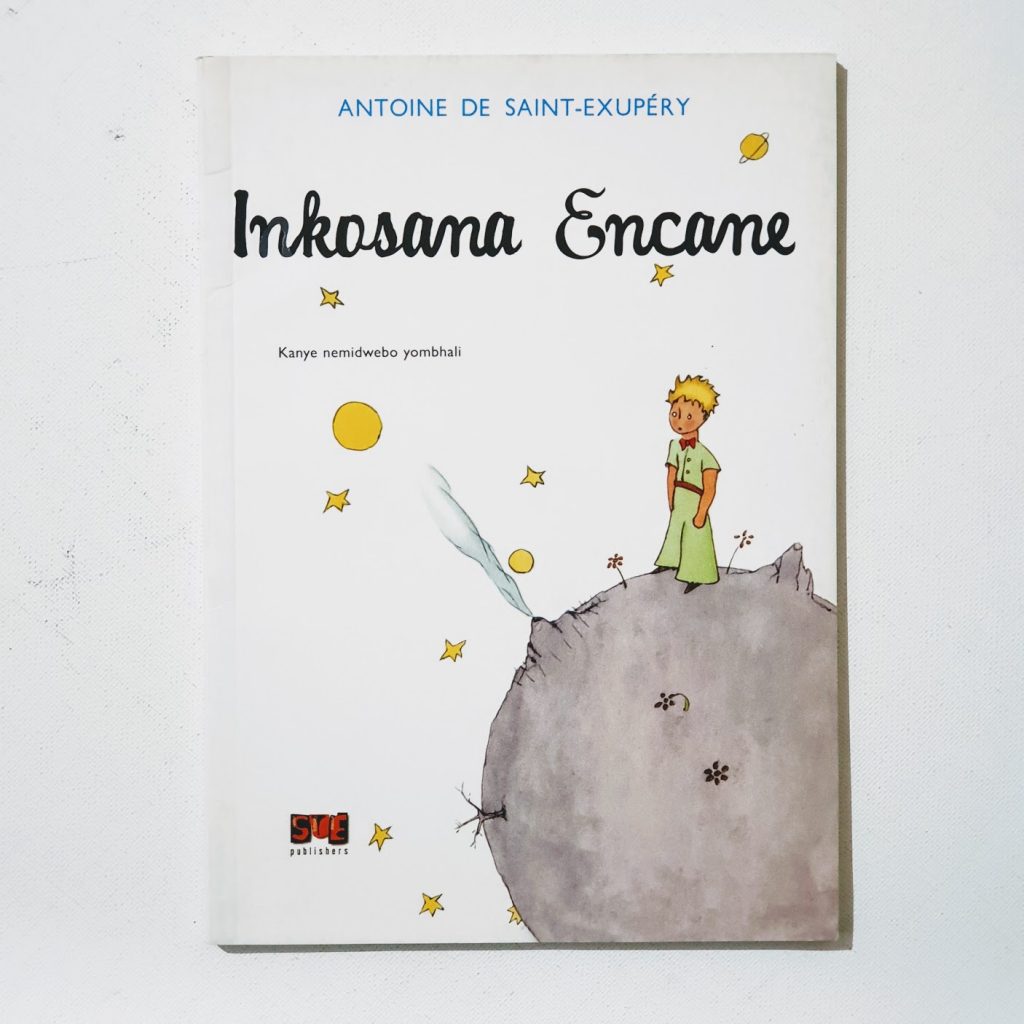
Inkosana Encane — in Zulu language.
isiZulu takes its name from izulu, meaning sky, heaven or weather, so that amaZulu, the Zulu people, style themselves quite literally the people of heaven, while ubuntu, perhaps Zulu’s best known export into world vocabulary, humanity or compassion, sits among its everyday nouns rather than as some imported philosophical term. Linguistically the language belongs to the Zunda branch of Nguni, alongside Xhosa and the various Ndebele tongues, sharing with them a z where the neighbouring Tekela languages, siSwati and Phuthi among them, instead say t, one small consonant marking out two branches of the same Nguni family.
What is now the largest home language in South Africa began as the speech of one small chiefdom on the White Mfolozi river, raised to prominence almost entirely by conquest. Under Shaka in the early nineteenth century, that chiefdom’s military reforms, notably the short stabbing spear and a tightly disciplined age regiment system, allowed it to absorb dozens of neighbouring groups within a few short years, an upheaval remembered as the Mfecane, whose refugees carried Nguni speech as far north as Malawi and Zambia even as those who stayed behind found their own dialects gradually folded into an emerging common Zulu identity. Written Zulu arrived later and from outside, the first grammar published in Norway in 1850 by the missionary Hans Schreuder and a full Bible translation following in 1883, before Zulu writers themselves took up the pen. John Dube, founder of the Ohlange Institute in 1901, gave the language its first novel, Insila kaShaka, in 1930, fittingly a tale drawn from Shaka’s own household.
Zulu carries the richest click inventory of any Nguni language, fifteen distinct clicks built from three points of articulation, dental, postalveolar and lateral, each multiplied across five manners including plain, aspirated, nasalised and breathy voiced variants, a phonological inheritance from the region’s earlier Khoisan speaking peoples layered onto an otherwise thoroughly Bantu grammar of noun classes and verbal agreement. With well over thirteen million first language speakers and many millions more using it as a second tongue, isiZulu remains close enough to Xhosa and Northern Ndebele for real mutual understanding, standing at the very centre, both demographically and historically, of the Zunda Nguni world from which siSwati and Phuthi long ago diverged.