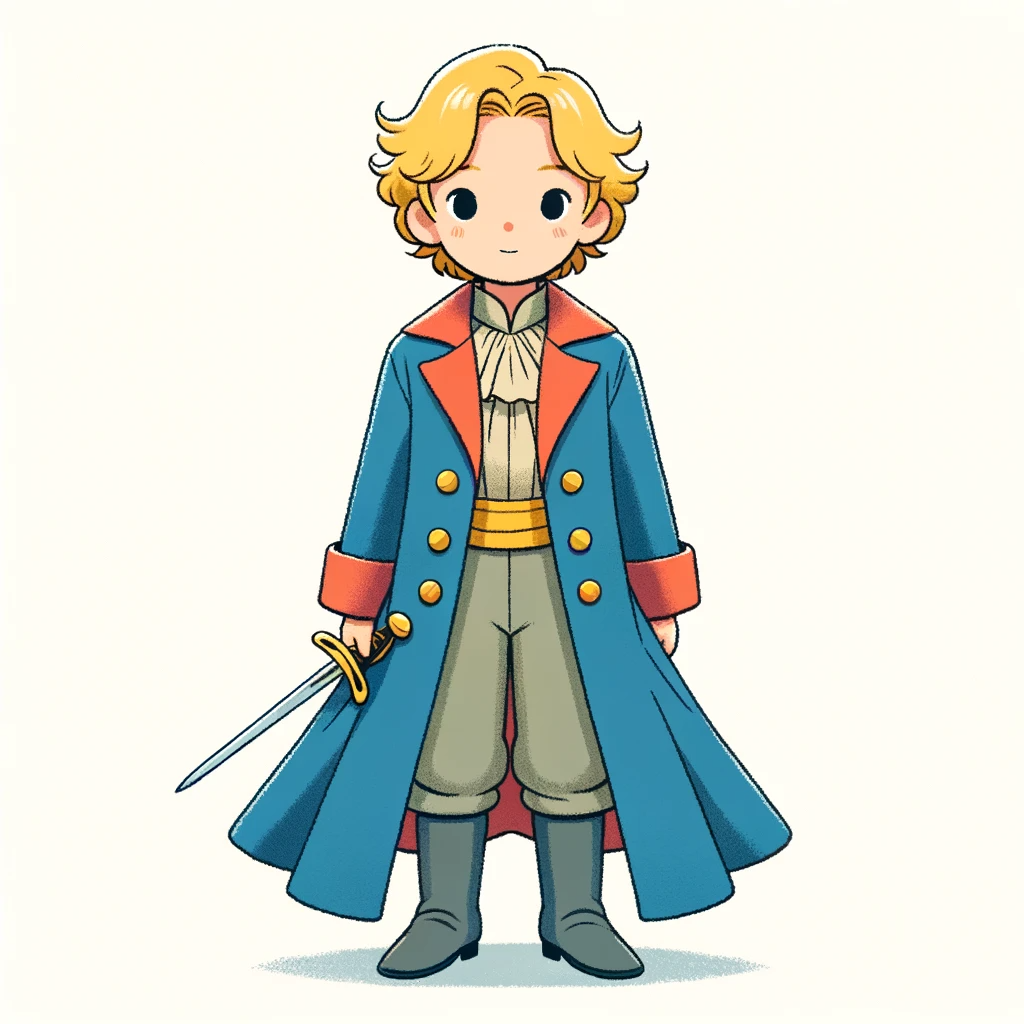

This book is a reprint of a classical unfinished, incomplete translation of Le Petit Prince in Tamasheq, made in 1958.
Tuareg (Tamasheq), known in its various forms as Tamasheq, Tamajaq and Tamahaq, is the language of the Tuareg, the legendary people of the Sahara and the Sahel. They live across a vast territory that spans northern Mali, Niger, southern Algeria, southwestern Libya and northern Burkina Faso, from the dunes and rocky plateaus of the Hoggar and the Aïr to the banks of the Niger at Timbuktu and Gao. The Tuareg call themselves Kel Tamasheq, the people who speak Tamasheq, and the language is spoken by between one and two million people. Tamasheq in the narrower sense, used in this book, is the variety of Mali, with its two main dialects of Timbuktu and of the Adrar des Ifoghas around Kidal.
The Tuareg languages belong to the Berber branch of the Afroasiatic family, and they are cousins of Kabyle and of the Tamazight of Morocco, and more distantly of Arabic, Hebrew and Amharic. Because the Tuareg lived for centuries in the isolation of the desert, their speech kept many archaic Berber features, and it is often regarded as one of the most conservative forms of Berber. Its neighbours in the Sahel include Bambara, Songhay and Hausa, and its vocabulary bears traces of long contact with Arabic, the language of Islam and of the caravan trade.

One of the most extraordinary treasures of the Tuareg is their writing, Tifinagh, which descends from the ancient Libyco-Berber script carved on rocks across North Africa more than two thousand years ago. Tifinagh can be written from left to right, from right to left or from top to bottom, and among the Tuareg it has traditionally been taught by women, who used it for love messages, riddles and inscriptions on jewellery. Tuareg society itself has many unusual traits: men, not women, traditionally wear the veil, the indigo tagelmust that earned them the name of the blue men of the desert, while women enjoy great freedom and respect, and descent was long traced through the mother.
Tuareg culture is famous for its poetry and music. Women play the imzad, a one stringed fiddle whose music UNESCO has recognised as intangible heritage, and the tende drum accompanies camel festivals and celebrations. In recent decades bands such as Tinariwen have carried the hypnotic guitars of desert blues to audiences across the world. The silver crosses of Agadez, the mud minarets of the Sahel and the manuscripts of Timbuktu all belong to the world of this language, and a Tuareg little prince, even an unfinished one, carries the silence and the stars of the Sahara within its pages.