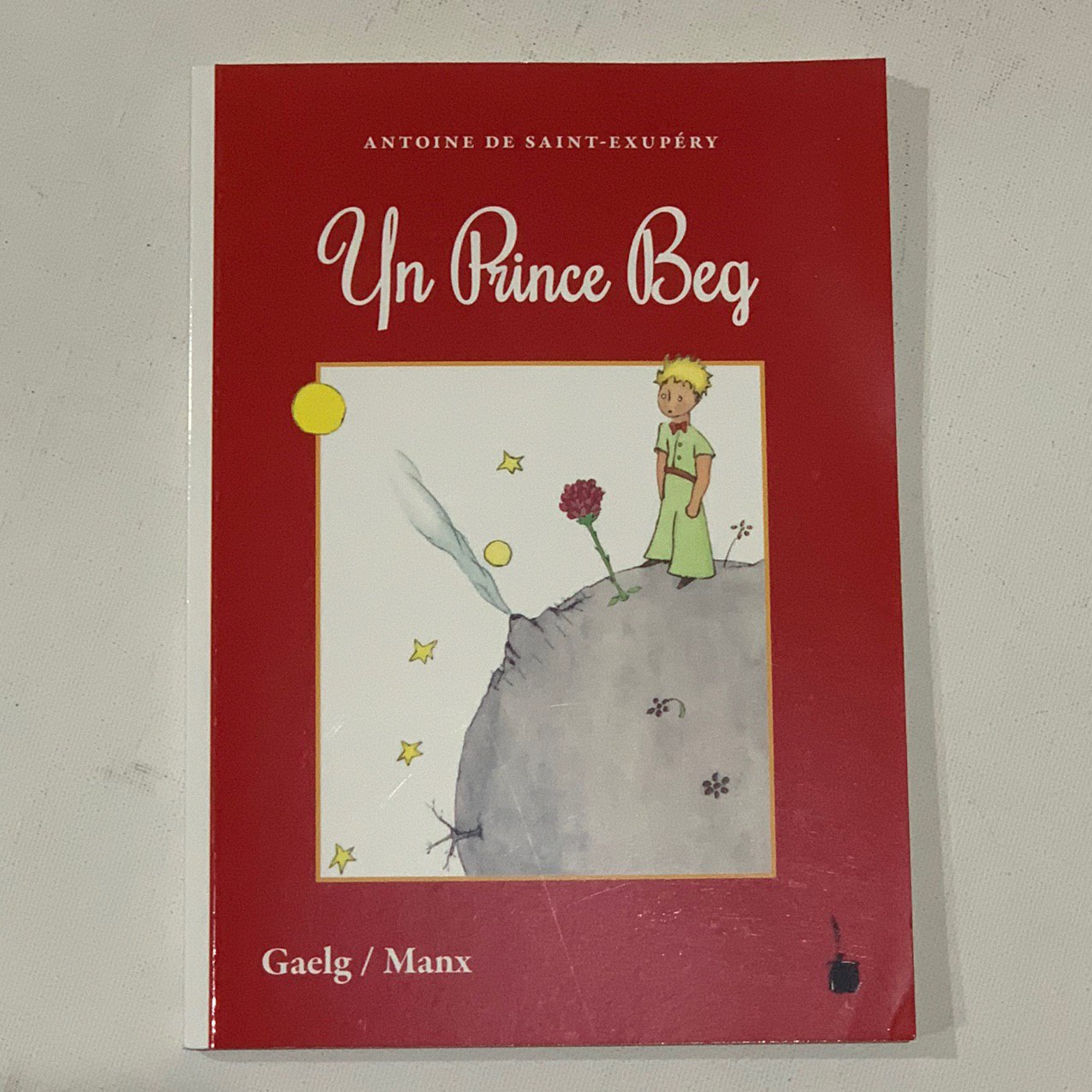
Yn Prince Beg, in Manx Celtic language used in the Isle of Man (Ellan Vannin).
Manx (Gaelg) belongs to the Goidelic, or Gaelic, branch of the Insular Celtic languages, standing alongside Irish and Scottish Gaelic as one of three sister tongues descended from a common Old Irish ancestor, and it is native to the Isle of Man, the small self governing island set squarely in the Irish Sea between Britain and Ireland. That position gave the island a double inheritance, for its history was shaped as much by Norse settlement and rule as by Gaelic tradition, producing the hybrid Norse Gaelic Kingdom of the Isles and leaving behind, most famously, the ancient open air parliament of Tynwald, whose very name is Norse, still convening each year in a tradition older than almost any other continuous legislative assembly in the world.
Manx wears its kinship with Irish and Scottish Gaelic in its sounds and grammar far more than in its appearance on the page, and this is one of the language’s most curious features. Where Irish and Scottish Gaelic each developed their own internally consistent spelling traditions rooted in centuries of manuscript scholarship, Manx was set down comparatively late, chiefly by clergymen translating the Bible and prayer book in the seventeenth and eighteenth centuries, who wrote the language much as it struck English and Welsh trained ears. The result is a written Manx that looks strikingly unlike its Gaelic sisters despite sounding closely related to them when spoken aloud, a linguistic cousin dressed, as it were, in borrowed clothes.
Manx also holds a singular place in the story of language survival itself, for it came remarkably close to vanishing altogether, its last speaker from the old unbroken chain of native transmission, Ned Maddrell, dying in 1974 and prompting linguists at the time to record the language as extinct. Yet Manx did not stay silent, and through decades of determined revival work, including Manx medium schooling at Bunscoill Ghaelgagh, it has since become one of the rare and celebrated cases of a language returning from beyond that brink, once again being learned as a first tongue by children on the very island where it was so nearly lost for good.