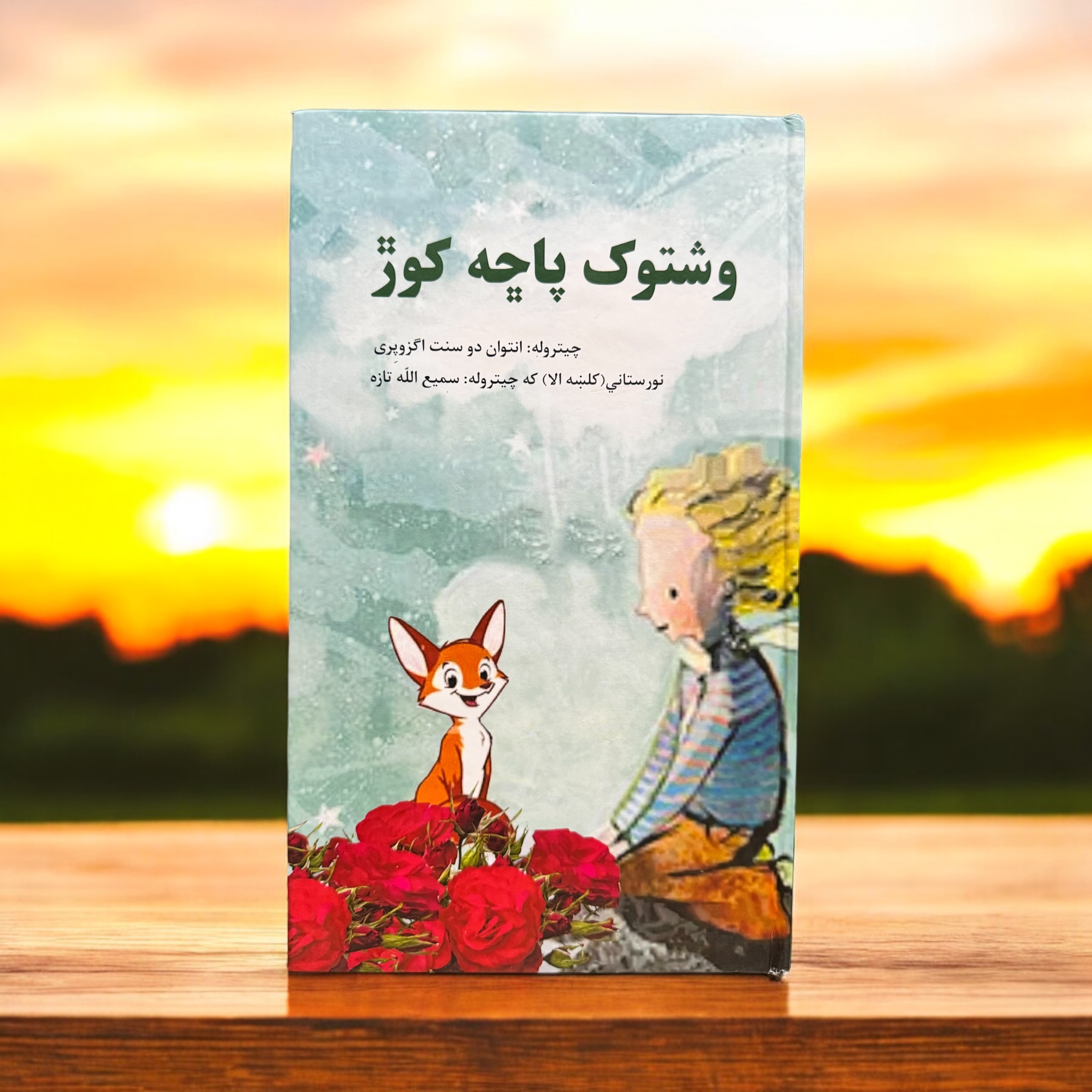
وشتوک پاچه کوژ (Washtuk pācha kozh) — in Nuristani Kalasha.
Kalasha-ala (also rendered Wai-ala, and known in Western scholarship as Waigali) is spoken by some ten to fifteen thousand people in the Waigal valley of Nuristan province, tucked into the remote northeastern highlands of Afghanistan. It belongs to the Nuristani branch of the Indo Iranian language family, a branch so distinctive that many linguists, following the pioneering fieldwork of Georg Morgenstierne and Richard Strand, treat it as a third independent branch of the family standing apart from both Iranian and Indo Aryan altogether. Waigali appears to have broken away from the shared Indo Iranian trunk before the composers of the Rigveda and the priests of ancient Iran had even gone their separate ways, which means its sounds and structures preserve hints of a stage of the language family older than either Sanskrit or Avestan, a linguistic time capsule tucked into a single Afghan valley.
The people who speak it were, until remarkably recently, among the last openly polytheistic societies anywhere in the Indo Iranian world, part of a wider region the surrounding Muslim populations called Kafiristan (land of unbelievers). Their religion centred on a creator god named Imra (also written Imro), alongside a formidable war and hunting deity called Gish, and a fertility goddess known across the Nuristani valleys as Disani, worshipped through animal sacrifice, ritual wine drinking, and elaborate carved wooden effigies raised in honour of the dead, a religious world closely related to, yet distinct from, the old Vedic and pre Zoroastrian Iranian pantheons. That world ended abruptly in 1895 and 1896, when the Afghan ruler Amir Abdur Rahman Khan led a military campaign to forcibly convert the entire region to Islam, after which Kafiristan was renamed Nuristan, land of light, built from the Persian nur, meaning light, and the familiar suffix -istan, land of. The Waigali people and their language survived that upheaval even as their old religion did not, which is precisely what makes the language itself such a precious linguistic artefact today, a fossil of pre Islamic Hindu Kush civilisation still spoken daily in an ordinary Afghan valley.
Within the small Nuristani family itself, which also includes Kamkata-vari (or Kativiri), Vasi-vari (Prasun), Ashkun, and Tregami, Waigali sits closest to Ashkun, the two sometimes grouped together as a southern Nuristani cluster in contrast to the northern Kativiri group and the strikingly divergent, almost isolate-like Prasun, whose speakers can struggle to understand any of their linguistic cousins without long exposure. Wedged between the Pashto speaking Pashtun lands to the south and west and Dari Persian as the administrative and trade language of Afghanistan more broadly, with the wider Dardic speaking world of the Hindu Kush lying just across the mountains to the east, Waigali has absorbed loanwords from every direction while stubbornly keeping its own archaic grammatical skeleton intact. It remained unwritten for most of its history, known to the outside world chiefly through the patient transcriptions of a handful of twentieth century linguists who climbed into the Waigal valley to record it, and it endures today as one of the rarest survivals in the whole Indo Iranian family, a language that split off almost at the root of the tree and somehow kept speaking ever since.