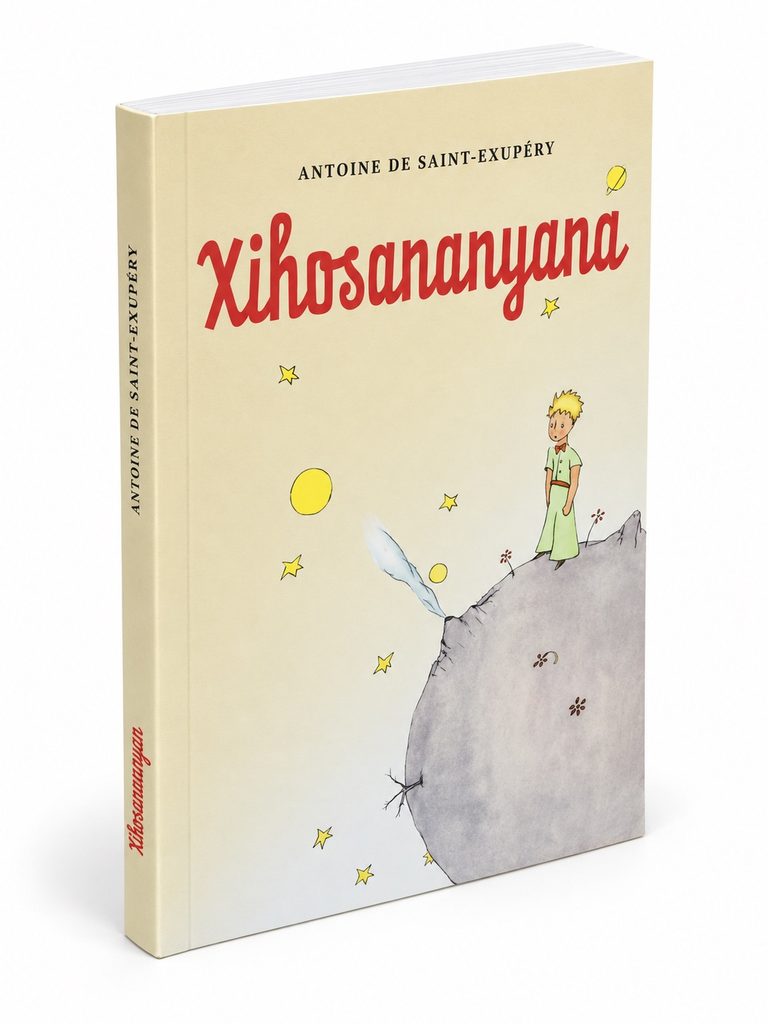
Xihosananyana — in Changana language.
Changana (Xichangana) is a Bantu language belonging to the Tswa-Ronga group, a small but closely related cluster of Southern Bantu languages spoken across southern Mozambique, northeastern South Africa, and southeastern Zimbabwe. Within that group, alongside Tswa (Xitswa) and Ronga (Xironga), Changana is essentially a Mozambican name for what South Africa officially calls Tsonga (Xitsonga); the dialects overlap so heavily that Changana is often described as the most prestigious variety underlying the standardized South African form. Genetically it’s distinct from its geographic neighbors: the Nguni languages (Zulu, Xhosa, Swazi, Ndebele) and Sotho-Tswana form separate Southern Bantu branches, so Changana is a cousin to them within Bantu, not a dialect of either.
Its modern history and much of its culture, though, were shaped by exactly that Nguni contact. In the 1820s, amid drought and the upheavals following the rise of the Zulu kingdom, a Nguni general named Soshangane led his warriors into southern Mozambique and in 1824 founded the Gaza Empire, subjugating the existing Tsonga-, Ronga-, Chopi-, and Ndau-speaking populations. Conquered communities were required to adopt Nguni customs, including clan-surname (xivongo) structures and elements of cattle culture and stick-fighting; even though their everyday language remained fundamentally Tsonga. The empire’s name lives on in Mozambique’s Gaza Province, and the ethnonym “Shangaan,” still used for these communities on both sides of the border, actually derives from the conqueror Soshangane’s own name rather than from the people themselves. The empire fell to Portuguese conquest in 1897, after which Changana-speaking communities settled into the agrarian, oral-tradition-rich life of the Maputo, Gaza, and Inhambane provinces that continues today.
What makes Changana distinctive is partly this paradox: a Bantu language and people carrying a Nguni-derived name and some borrowed Nguni social customs, while remaining linguistically un-Nguni, notably, Changana has no click consonants, unlike Zulu or Xhosa, and keeps the noun-class and tonal system typical of the wider Tsonga-Tswa-Ronga family rather than Nguni’s Khoisan-influenced phonology. It’s also demographically significant: Mozambique’s 2017 census recorded nearly 2 million native Changana speakers (about 8.9% of the population), making it the country’s third-largest language group after Emakhuwa and Portuguese, and the dominant indigenous language of the far south. Though Portuguese remains Mozambique’s sole official language, Changana is recognized as one of its national languages, taught and used in local media and primary education, and it stands as the vernacular anchor connecting Mozambican identity in the south to the broader Tsonga-speaking world across the border in South Africa.