
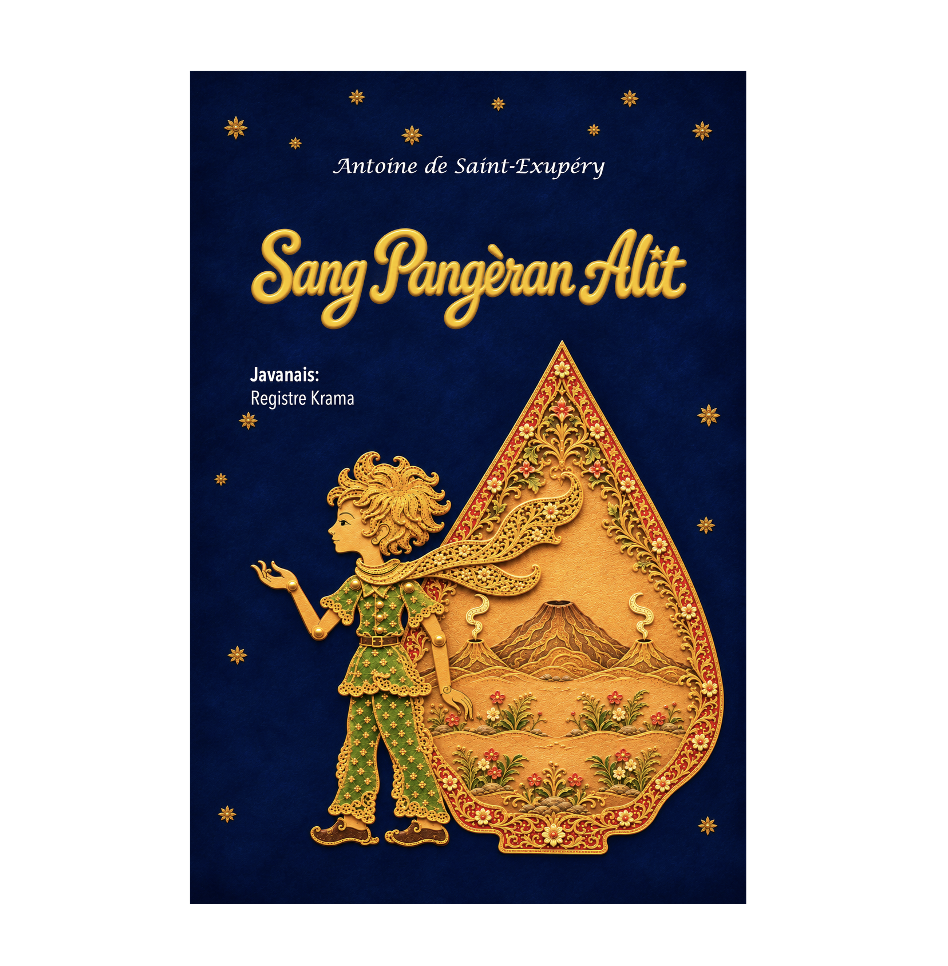
Sang Pangèran Alit — in Javanese Krama Madya
Javanese (ꦧꦱꦗꦮ, Basa Jawa) belongs to the Malayo Polynesian branch of the vast Austronesian family, spoken by more people than any other language of that family save Malay and Indonesian, and it is famous above all for its intricate system of speech levels, the unggah ungguh, in which a speaker chooses an entirely different vocabulary according to the standing of the person addressed. Between the familiar Ngoko (ꦔꦺꦴꦏꦺꦴ, Ngoko) used among intimates and the exalted Krama Inggil (ꦏꦿꦩꦲꦶꦁꦒꦶꦭ꧀, Krama Inggil) reserved for elders, nobility and honoured guests lies Krama Madya (ꦏꦿꦩꦩꦢꦾ, Krama Madya), the middle register, a courteous yet unpretentious way of speaking that has long been the natural voice of the village, the market and everyday polite encounters between people who are neither close friends nor formal superiors.
The speech levels themselves grew to full maturity in the courts of the Mataram sultanate and its successors at Surakarta and Yogyakarta from the seventeenth century onwards, where an elaborate etiquette of rank encouraged the cultivation of parallel vocabularies, many Krama words being formed by deliberately reshaping their Ngoko counterparts or by drawing on the Sanskrit inheritance of Old Javanese (ꦏꦮꦶ, Kawi), the literary language of the Hindu Buddhist kingdoms of Mataram, Kediri and Majapahit. Krama Madya emerged as the practical compromise of ordinary life, combining Krama vocabulary with simpler, shortened or Ngoko derived forms, so that where the high register asks menapa for what and punika for this, and Ngoko simply says apa and iki, the middle register settles comfortably on napa and niki, while the respectful but homely sampeyan takes the place of the lofty panjenengan and the blunt kowe for you. Court purists sometimes looked down upon it as an impure or rustic Krama, yet it is precisely this unfussy warmth that made it the register most Javanese actually lived in.
That hierarchical model proved remarkably influential among Java’s neighbours, for Sundanese, Madurese and Balinese, all Austronesian cousins shaped for centuries by Javanese courtly culture, developed speech level systems of their own clearly patterned on the Javanese example, while the Javanese communities carried to Suriname and New Caledonia under colonial labour schemes preserved fragments of Krama far from home. At the same time the very weight of this etiquette helps explain why Indonesian, belonging to no single ethnic group and free of such gradations, was embraced as the neutral national tongue, and why many young urban Javanese today slip into Indonesian rather than risk choosing the wrong level. Krama Madya thus occupies a delicate and rather touching position, the gentle middle ground of a language that encodes respect into almost every word, and the register in which generations of Javanese have learnt to be courteous without ever ceasing to be at ease.