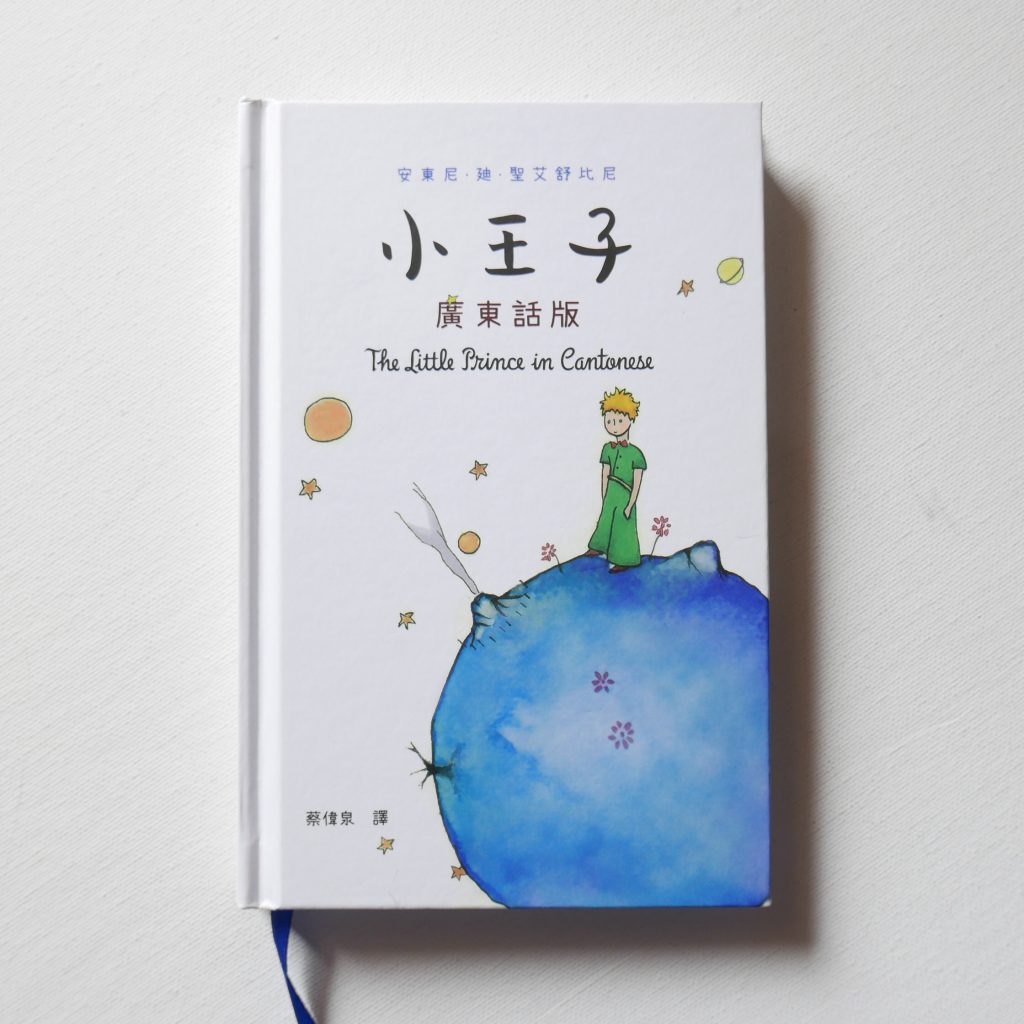
小王子 — in Cantonese.
Cantonese (廣東話, Gwóngdūngwá) belongs to Yue Chinese (粤語, Jyuhtyúh), one of the great branches of the Sinitic family within Sino Tibetan, and is the historic tongue of the Pearl River Delta, rooted above all in the old trading city of Canton (廣州, Gwóngjāu), known today as Guangzhou. From that single southern port the language travelled further than almost any other Chinese variety, carried by generations of merchants, labourers and emigrants who left long before Mandarin had become the nation’s standard, so that even now Cantonese remains the Chinese voice most likely to be heard echoing through the older Chinatowns of San Francisco, Vancouver, Sydney and London.
What sets Cantonese apart linguistically is its remarkable conservatism, for in many respects it has preserved features of Middle Chinese, the language of the Tang dynasty and its classical poetry, more faithfully than Mandarin itself. It retains the crisp final consonants p, t and k that Mandarin lost centuries ago, so that the old rhyme schemes of Tang verse often still scan properly when read aloud in Cantonese, and it carries a famously intricate system of nine tones against Mandarin’s four, giving the spoken language its distinctive, musical rise and fall. Guangzhou’s long centuries as the administrative heart of the southern Lingnan region, and later as the single officially sanctioned gateway for foreign trade during the era of the Thirteen Factories, only deepened this sense of Cantonese as a language shaped by contact, commerce and a certain proud southern independence from the imperial north.
That independence is felt just as strongly in the language’s cultural life today, above all in Hong Kong, where Cantonese underpins a rich vernacular literature, sharp tabloid press and a cinema tradition, from Cantonese opera through to the films of Bruce Lee, John Woo and Wong Kar wai, that carried the language’s rhythms to audiences who never otherwise heard a word of Chinese. Though it shares the same written characters as Mandarin at the formal level, everyday Hong Kong writing has developed its own colloquial vocabulary and even unique characters found nowhere in standard Chinese, while spoken Cantonese and spoken Mandarin remain mutually unintelligible cousins rather than dialects of one tongue, two branches of the same ancient family that grew, through geography and history, into two distinctly different ways of speaking China.