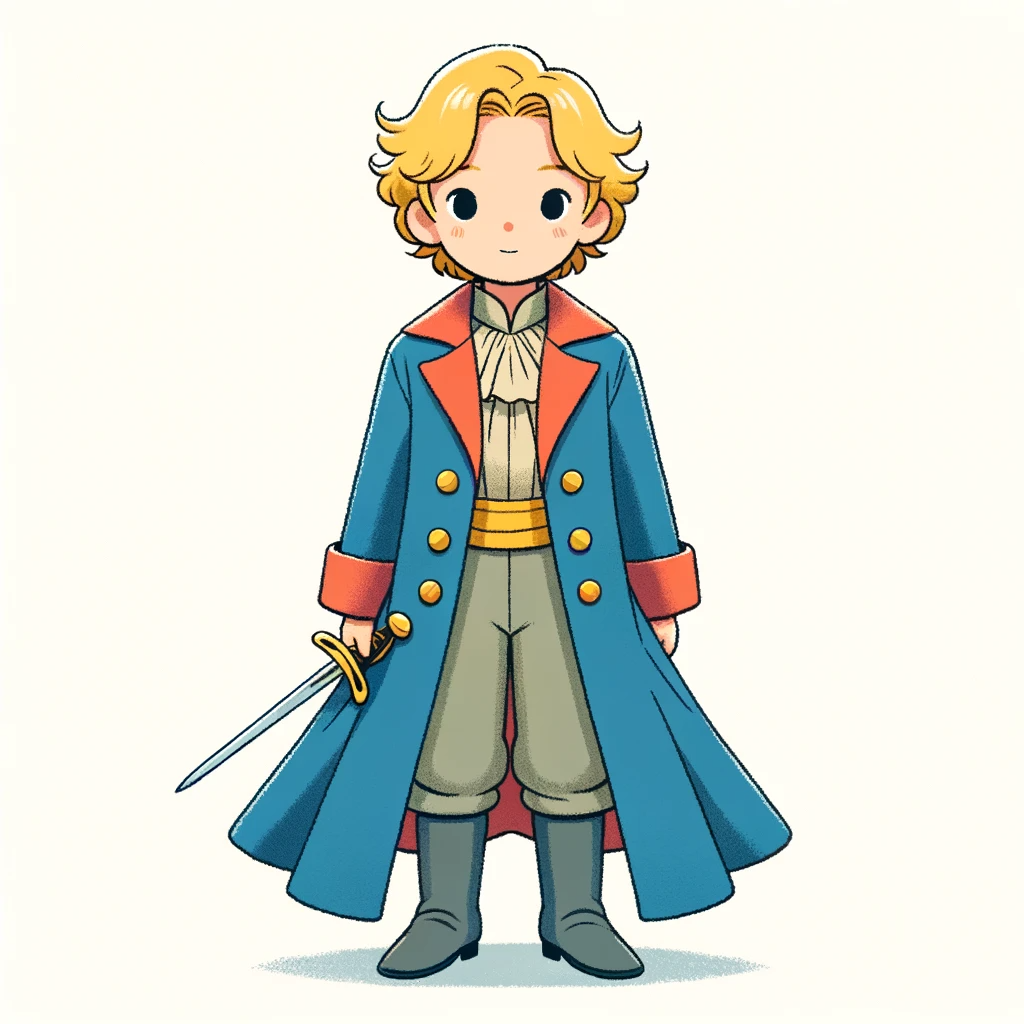
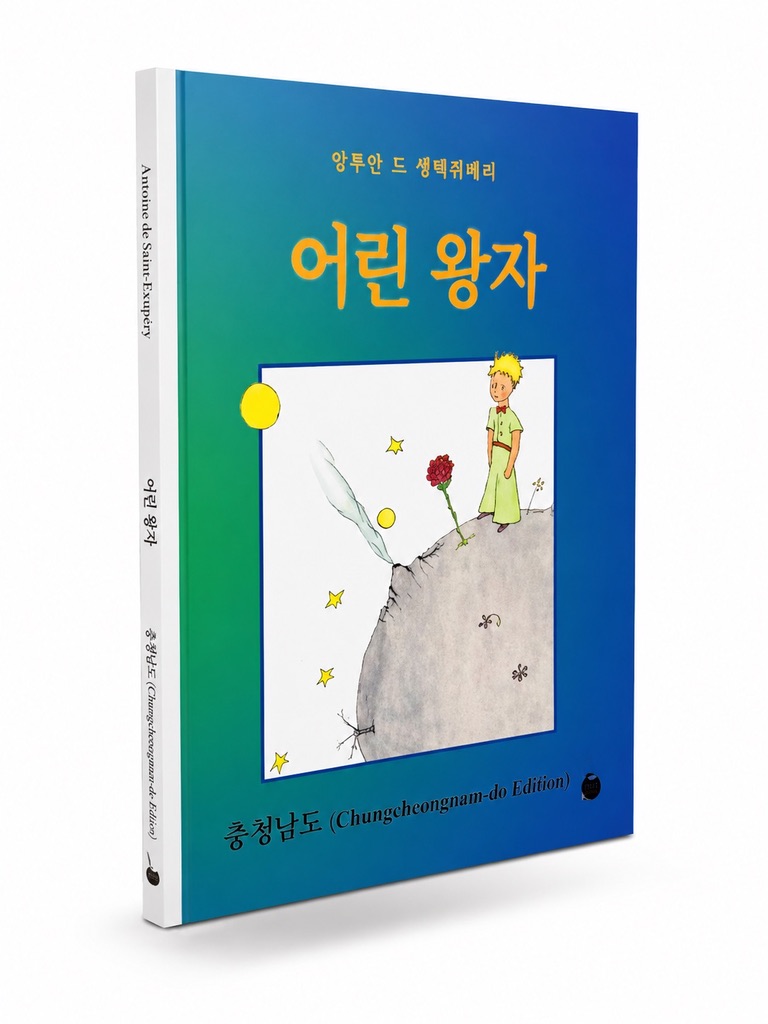
어린 왕자 (Eorin Wangja) — in Chungcheong dialect.
The Chungcheong dialect occupies a rather graceful middle ground within the Korean linguistic landscape. Spoken across the two Chungcheong provinces in the west-central part of the peninsula, it is classified as a transitional dialect: it forms a continuum sharing much of its vocabulary with the central Gyeonggi dialect while taking on the intonation of the southwestern dialects. This positioning gives it a curious dual character, geographically wedged between Seoul’s standard speech and the more distinctive southern dialects of Jeolla and Gyeongsang, and consequently often overlooked by outsiders as merely a softer variant of the standard, when in truth it possesses its own coherent grammar and identity.
What most immediately distinguishes the dialect to Korean ears is its tempo. Chungcheong speech is noted above all for being slower-paced, almost drawl-like, lending it a modest and easygoing quality that listeners commonly describe as friendlier. This unhurried cadence is bound up with vowel lengthening and characteristic shifts — the vowel ㅛ commonly shifting toward ㅠ during conjugation, for instance — alongside a set of sentence endings unmistakably its own. The interrogative “-n gyeo” (-ㄴ 겨) replaces the standard question form, while affirmations use ‘그려’ (geulyeo) in North Chungcheong and ‘기여’ (giyeo) alongside ‘그려’ in the South, and the celebrated all-purpose interjection 뭐여 (mwoyeo) can be deployed in almost any conversational situation to convey mild surprise or query.
The dialect’s texture owes a great deal to the region’s agrarian history. Chungcheongnam-do in particular was historically a significant agricultural province, its rice paddies and farmlands shaping a slower rural pace of life that the dialect’s relaxed intonation still carries, and because the region was comparatively less swept up in the rapid industrialisation that transformed much of the rest of South Korea, its traditional speech patterns were preserved rather longer than elsewhere. Within the broader Korean dialect family — usually reckoned to comprise six principal groups: Gyeonggi (the standard), Gyeongsang, Jeolla, Gangwon, Jeju, and Chungcheong — this one is perceived rather more ambivalently than its neighbours. Those favourably disposed towards it call it relaxed and endearing, while detractors find it dazed or exasperating; it ranks as the third most recognised dialect after Gyeongsang and Jeolla, yet its own speakers tend to display less regional pride in it than Jeolla or Gyeongsang speakers do in theirs.
It is this very quality of quiet, unshowy distinctiveness that makes the Chungcheongnam-do edition of Le Petit Prince such an apt artefact for a dialect-edition collection: the Little Prince’s own gentle, unhurried wisdom finds an unexpectedly natural home in a dialect whose defining trait, across every account, is precisely that same measured, understated warmth.