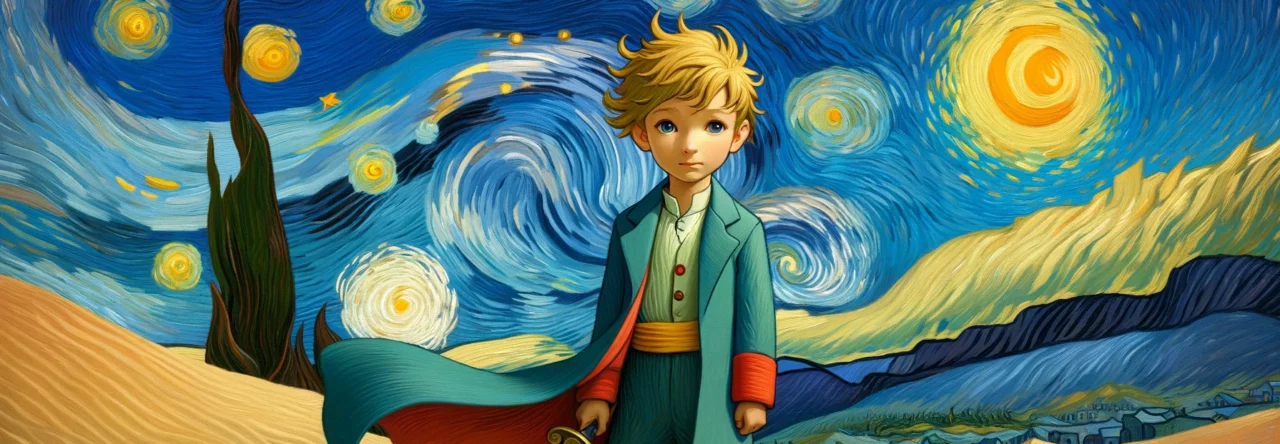
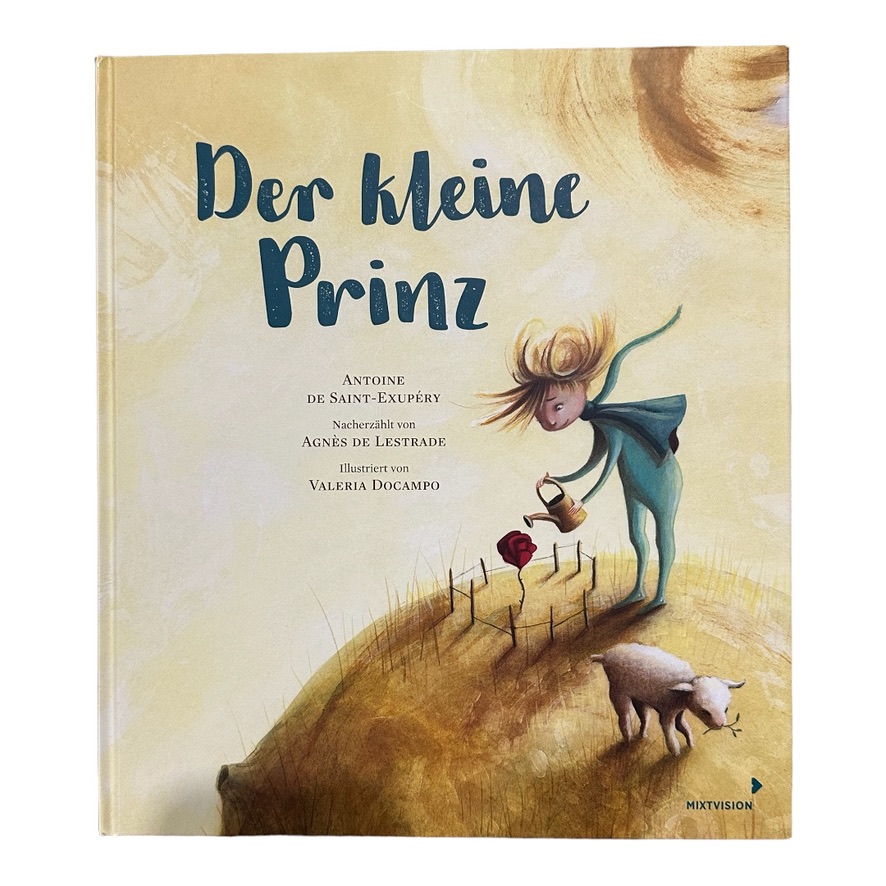
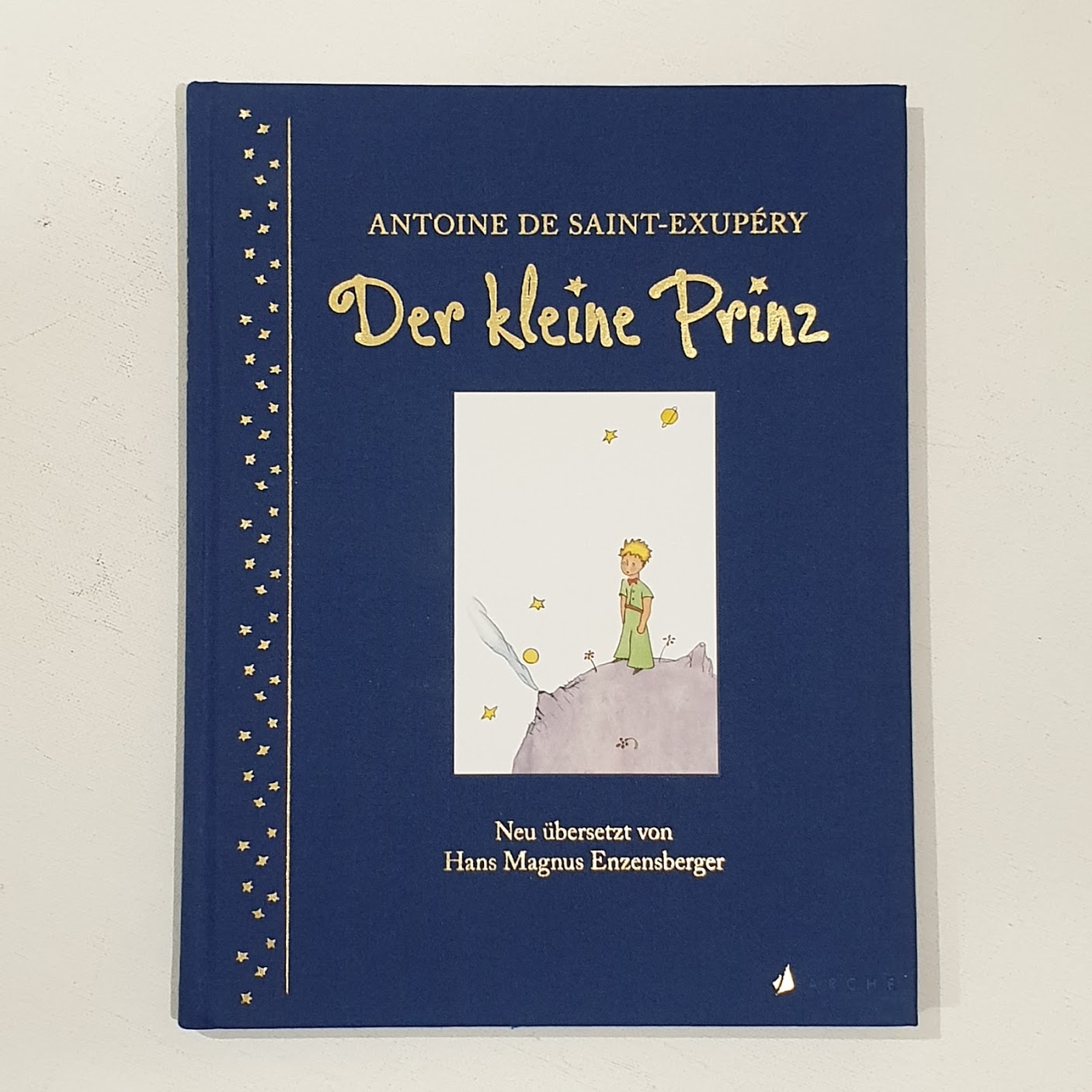
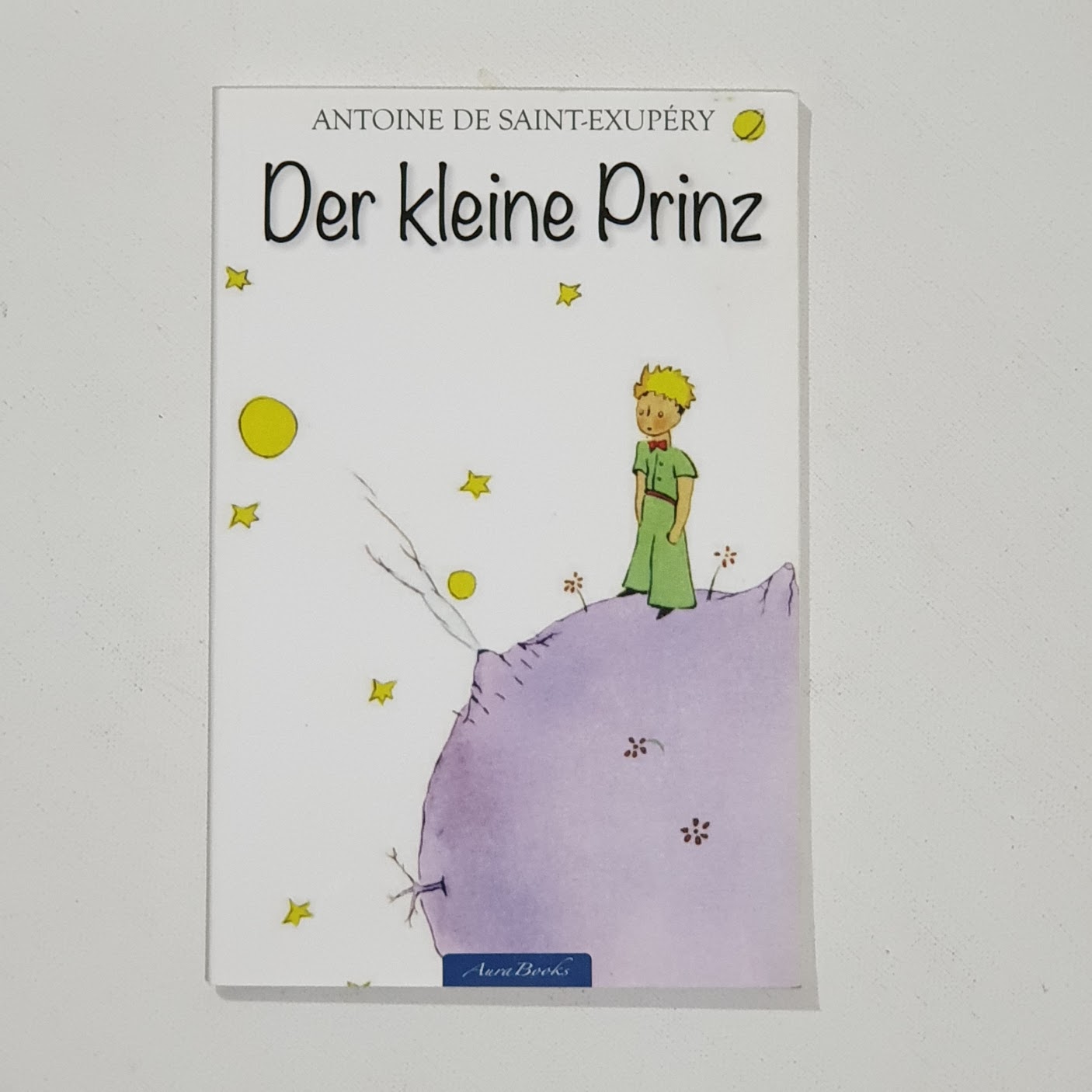
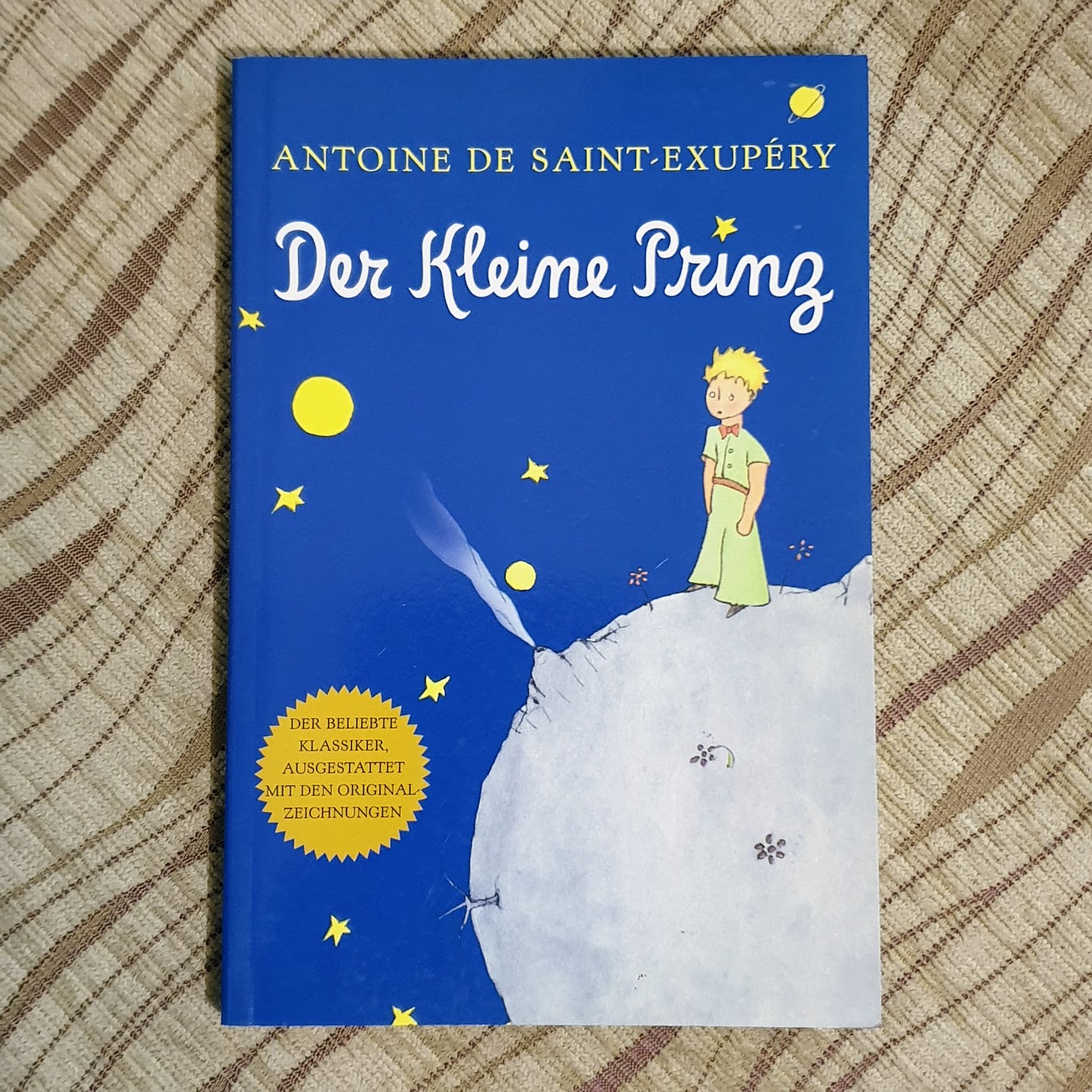
Der Kleine Prinz — in standard German.
German, Deutsch, belongs to the West Germanic branch of the Indo European family, making it a close cousin of Dutch, Niederländisch, Frisian, English, and the various dialects sometimes grouped as Low German, Plattdeutsch, all of which trace back to a shared West Germanic ancestor spoken along the North Sea coast in the early centuries of the first millennium. What actually separates German from that wider family, rather neatly, is a single identifiable historical sound change, the High German consonant shift, die hochdeutsche Lautverschiebung, which swept through the southern dialects of the West Germanic world sometime between the sixth and eighth centuries and hardened certain consonants in ways that English, Dutch, and Low German simply never underwent, which is why English water sits beside German Wasser, English pepper beside German Pfeffer, and English ship beside German Schiff, three small but telling fossils of the very moment German broke away from its closest relatives and became, phonologically speaking, its own distinct branch.

The language’s later history is defined above all by a single act of translation. After centuries in which Old High German, Althochdeutsch, and then Middle High German, Mittelhochdeutsch, produced a genuinely rich courtly literature, the great medieval epic the Nibelungenlied and the love poetry of the Minnesang tradition among them, German remained a patchwork of mutually distant regional dialects with no single accepted written standard. It was Martin Luther’s translation of the Bible into German, completed across the 1520s and 1530s, that changed this decisively, his choice of an East Central German chancery style becoming, through sheer print circulation, the template around which a genuinely shared written German slowly crystallised, in much the same way that Dante’s Florentine verse ended up shaping standard Italian centuries later. That standard was refined and formally codified far more recently than most people assume, with the Duden dictionary, first published in 1880, still serving today as the closest thing German has to an official arbiter of correct spelling.
That same standardising impulse also extended, for a very long time, to the actual shape of the letters on the page. From the early sixteenth century until well into the twentieth, German was printed not in the rounded Antiqua type this sentence uses but in Fraktur, an angular blackletter typeface commissioned for the Emperor Maximilian I, while everyday handwriting followed its own separate cursive tradition, Kurrentschrift, later restyled in 1911 into the more standardised Sütterlinschrift, taught nationally in German schools until both scripts were abolished, almost overnight, by Nazi decree in 1941. For roughly four centuries, then, written German possessed a visual identity every bit as distinctive as its grammar, and that identity’s abrupt disappearance still leaves a curious generational rift today, since Germans educated before 1941 could generally read and write Sütterlin fluently, while almost everyone born after cannot decipher a word of it without special training, meaning a good many families now hold letters from their own grandparents that they are, quite literally, unable to read.
Beneath the modern standard, German also conceals an extraordinarily rich dialect landscape, one considerably more fragmented than the tidy modern nation states speaking it might suggest. Low German in the north never underwent the consonant shift at all and remains, in effect, a separate linguistic branch closely allied to Dutch and English rather than to standard High German, while the southern Upper German dialects, Bavarian (Bairisch), and the Alemannic (Alemannisch) dialects, spoken across Switzerland, southwestern Germany, and Alsace, diverge from the written standard so thoroughly that Swiss German (Schweizerdeutsch), functions almost as a separate spoken language, regularly subtitled on German television and used by the Swiss themselves in virtually every everyday situation, reserving standard German almost entirely for writing, a stable and rather enviable division of labour between dialect and standard that most other German speaking regions have long since lost.
Structurally German rewards close attention: it retains four grammatical cases, three genders, and a famously flexible capacity for building enormous compound nouns by simply glueing shorter words together, alongside a distinctive word order that sends the main verb to the very end of subordinate clauses, forcing a listener to hold the entire grammatical structure in mind until the sentence’s final word finally resolves it. That combination of precision and structural flexibility helped make German, for much of the nineteenth and early twentieth centuries, one of the leading international languages of science and philosophy, the language in which Kant and Hegel wrote, in which Einstein and Planck published, and in which Freud first described the unconscious mind, a period of intellectual prestige that only really faded after the upheavals of the two world wars shifted global scholarly life decisively towards English.
German’s reach beyond its central European heartland is itself a small history of migration and diaspora. Yiddish, Jiddisch, grew directly out of medieval German dialects carried east by Ashkenazi Jewish communities from around the ninth century onward, absorbing Hebrew, Aramaic, and later Slavic vocabulary as it travelled, and developing into a rich, entirely separate literary language written in the Hebrew alphabet rather than the Latin one, a genuine sister tongue to German rather than a mere borrowing. German speaking communities also took root, and in many cases still survive, in the South Tyrol of northern Italy, among the Transylvanian Saxons of Romania, in Pennsylvania among the descendants of colonial German settlers, and, through a rather darker colonial chapter, in Namibia, each pocket carrying its own small, distinct inheritance of a language whose story, from a single consonant shift onward, has always been one of divergence, standardisation, and remarkably persistent local variety all at once.