
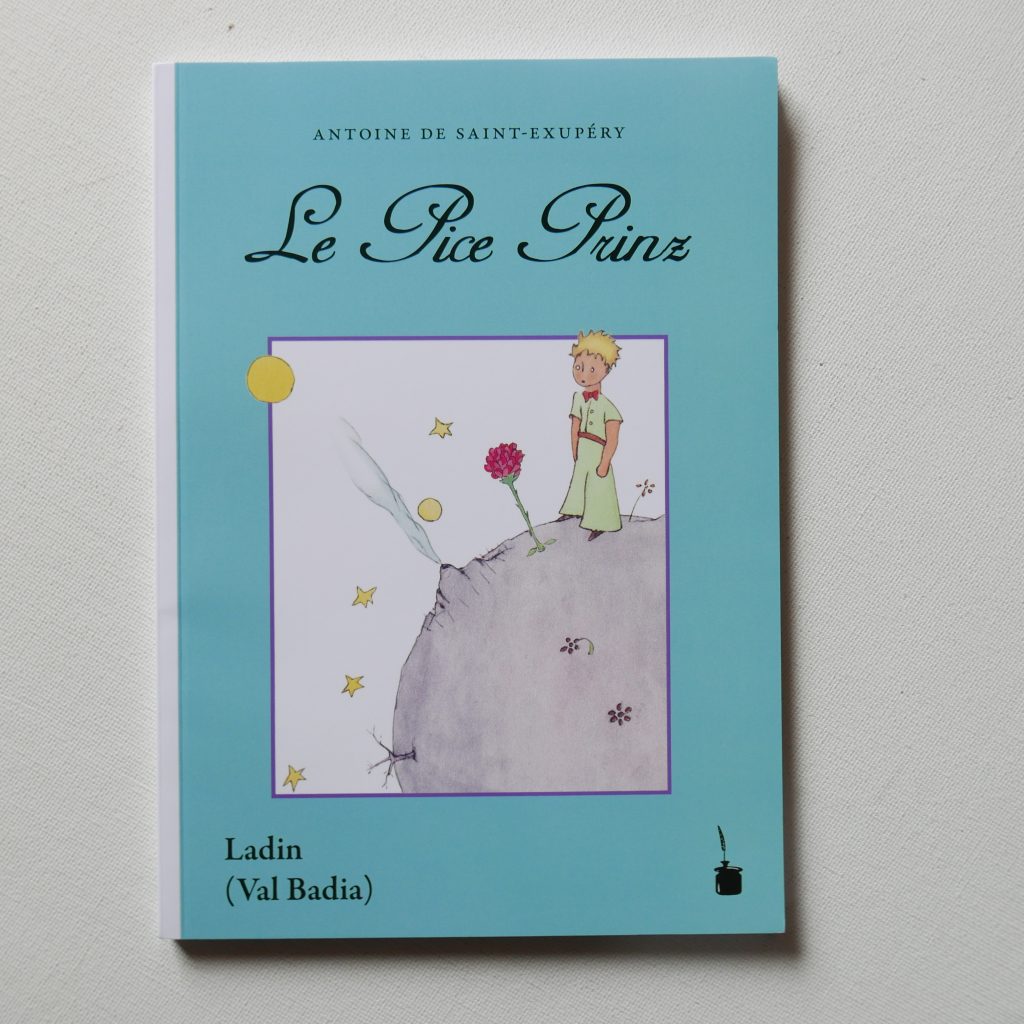
Le Pice Prinz — in Ladin.
Ladin (Ladin) belongs, together with Friulian and Romansh, to the Rhaeto-Romance branch of the Romance languages, and it survives today in a scattering of valleys folded deep into the Dolomites, that extraordinary limestone mountain range of north eastern Italy now protected as a UNESCO World Heritage Site. Each valley nurtures its own voice within the language, from Gherdëina in Val Gardena and Badiot in Val Badia to Fascian in the Val di Fassa, Fodom in Livinallongo and Anpezan around Cortina d’Ampezzo, a small archipelago of Latin speech scattered across some of the most dramatic peaks in Europe.
Ladin descends, like its Rhaeto-Romance cousins, from the Vulgar Latin carried into the Alps by Roman soldiers and settlers, yet what preserved it so distinctly was precisely the remoteness of these high valleys, tucked away from the main roads and later linguistic tides that gradually turned the surrounding lowlands towards Italian to the south and German to the north. That same remoteness, ironically, has also left the Ladin speaking valleys administratively divided, split since the aftermath of the First World War between the provinces of South Tyrol, Trentino and Belluno, a fragmentation that persists to this day despite a shared sense of Ladin identity and repeated calls from Ladin communities for closer political unity.
Nowhere is the language’s resilience more visible than in the trilingual schooling found in the Ladin valleys of South Tyrol, where children are taught in German, Italian and Ladin together from their very first years, a genuinely rare arrangement in Europe that treats the smallest of the three tongues as fully equal to its larger neighbours, while scholars and activists have laboured to build a unifying written standard, Ladin Dolomitan, from these varied valley speeches.