
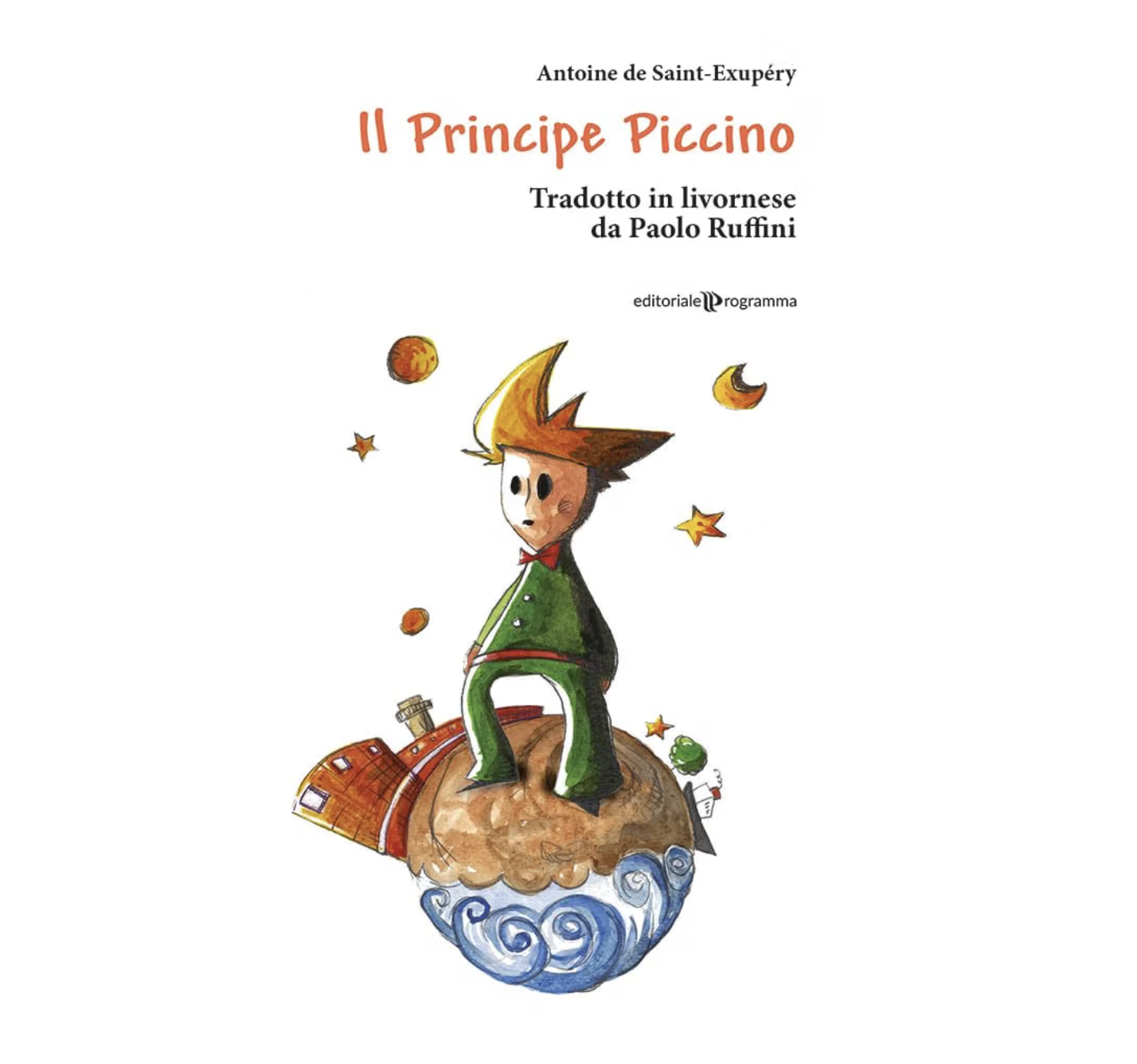
Livornese, livornese, the speech of the port city of Livorno on the Tuscan coast, known to English merchants of old as Leghorn, is a Tuscan dialect with an entirely different personality from its more famous cousin up the Arno in Florence, and the reason lies less in grammar than in the sheer strangeness of the city’s own history. Where Florence grew organically over a thousand years as an inland centre of banking, wool, and high culture, Livorno was, by comparison, invented almost overnight: it was the Medici grand duke Ferdinando I who, at the end of the sixteenth century, issued the celebrated Livornine Laws, the Leggi Livornine of 1591 and 1593, offering amnesty, religious toleration, and trading privileges to merchants and refugees of almost any origin willing to settle there. The result was a boomtown of extraordinary diversity for its era, drawing Sephardic Jews fleeing the Iberian expulsions, Greeks, Armenians, Englishmen, Dutchmen, and Moors into a single crowded harbour, and Livornese as a dialect still carries the linguistic fingerprints of that cosmopolitan flood, threading Spanish, Portuguese, Hebrew, Greek, and English loanwords through an otherwise entirely Tuscan grammatical frame in a way no other Tuscan variety can match.
Nowhere is that inheritance more vivid than in bagitto, the now nearly vanished Judeo Livornese vernacular once spoken by the city’s large and influential Sephardic Jewish community, which folded Spanish, Portuguese, and Hebrew vocabulary into everyday Tuscan speech and, even as bagitto itself faded as a living tongue in the twentieth century, left a permanent residue of words and expressions inside ordinary Livornese slang. Phonetically Livornese shares the famous gorgia toscana, the Tuscan throat, with Florentine and the rest of the region, softening certain consonants into breathy, aspirated sounds, yet it is spoken with its own distinctive rapid, clipped cadence that locals and outsiders alike recognise instantly, a rhythm shaped as much by a busy working port as by any literary tradition, since Livorno, unlike Florence, never produced a Dante to fix its speech in the national imagination.
What Livornese lacks in literary prestige, however, it more than makes up for in sheer verbal cunning, and this is perhaps its truest uniqueness among Tuscan dialects: Livornesi are famous across Italy for a particular strain of quick, biting, often outrageously irreverent humour, the battuta livornese, a wisecrack style that spares no one, least of all politicians and authority in general, and that reaches its fullest and most gloriously vulgar expression in Il Vernacoliere, a satirical magazine written almost entirely in Livornese dialect and still published today, revelling in profanity based wit that would be unthinkable in polished Florentine or standard Italian. That anti authoritarian, plebeian streak runs deep in the city’s modern history too, Livorno having been the birthplace of the Italian Communist Party in 1921, and it is tempting to see a straight line from the port’s centuries as a haven for outsiders, exiles, and sailors through to a dialect that has always sounded less like the language of scholars and more like the language of people who talk back, loudly, to whoever happens to be in charge.