
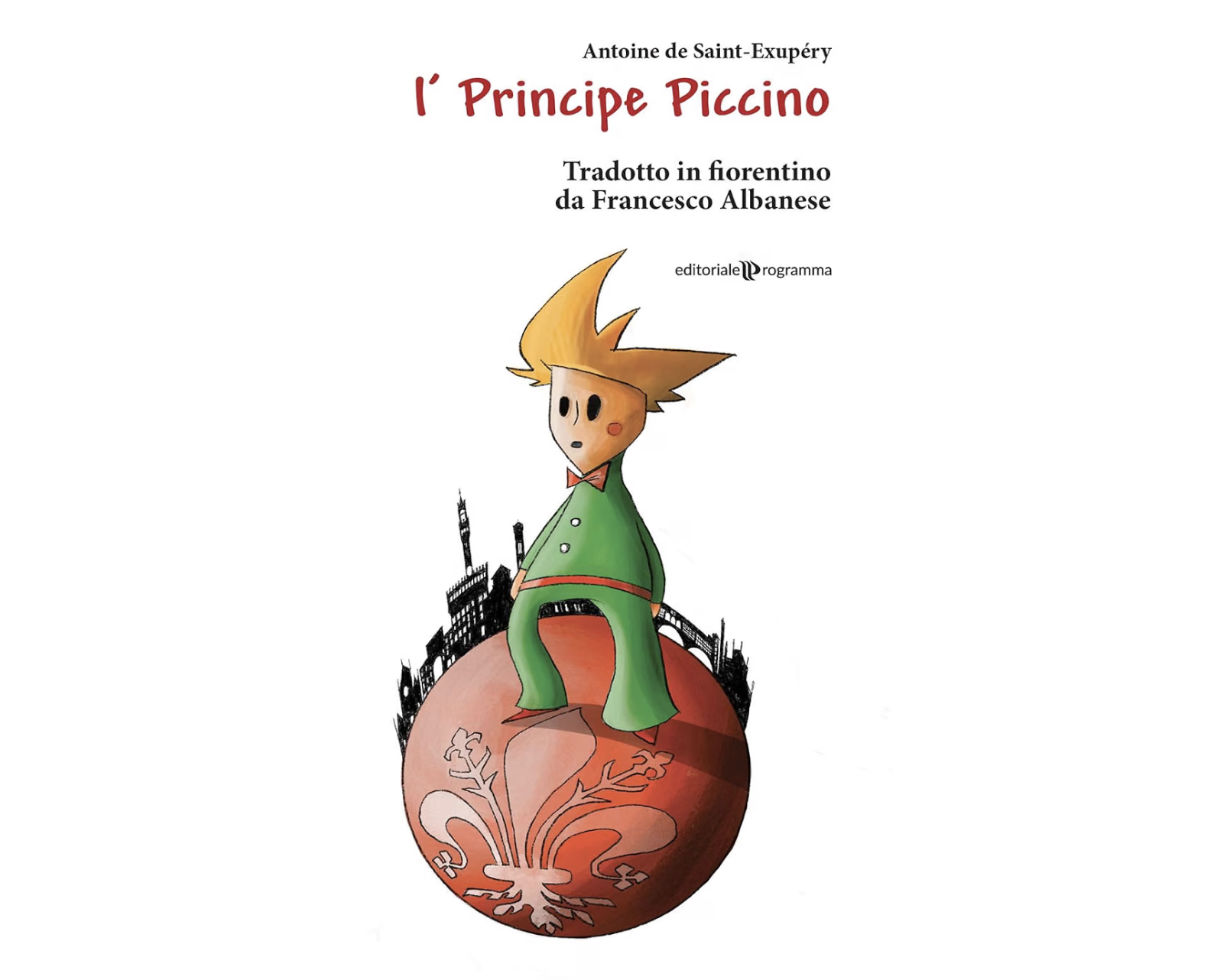
Fiorentino, Florentine, is at once one of the humblest and one of the grandest entries in the history of European languages: humble, because it began as simply the everyday speech of a middling Tuscan city on the river Arno, and grand, because that same speech, more than any other single dialect in Italy, became the direct ancestor of modern standard Italian, italiano. Florentine belongs to the Tuscan dialect group, toscano, itself part of the broader Italo Romance family that occupies the central band of the Italian peninsula, sitting linguistically between the Gallo Italic dialects of the industrial north, such as Lombard and Piedmontese, and the very different sounding dialects of the deep south, Neapolitan and Sicilian among them. What makes Florentine remarkable is not any particular exoticism of grammar or vocabulary within that family, but the sheer historical accident, or rather the sheer historical achievement, of having been chosen, centuries after the fact, as the template for an entire nation’s language.
That choice was made not by politicians or grammarians in the first instance but by poets. In the fourteenth century, three towering Florentine writers, Dante Alighieri, Petrarch, and Boccaccio, composed their great works, most famously Dante’s Commedia and Boccaccio’s Decameron, in the vernacular Florentine of their own day rather than in Latin, and the prestige of those works was so overwhelming that two centuries later, when Italian intellectuals engaged in the long running questione della lingua, the question of the language, over which dialect should become the literary and eventually national standard of a peninsula still fragmented into dozens of mutually unintelligible tongues, the Venetian scholar Pietro Bembo argued successfully for precisely that fourteenth century literary Florentine as the model. The peculiar result is that standard Italian today is, in effect, a somewhat fossilised, codified descendant of medieval Florentine rather than of the language actually spoken on the streets of Florence in any later century, which is why a modern Florentine speaker and a modern Roman or Milanese speaker of standard Italian can sound, on paper, as though they share an identical language, while in the mouth they plainly do not.
That divergence between page and mouth is nowhere more audible than in the celebrated gorgia toscana, the Tuscan throat, a distinctive sound shift found across Florence and much of Tuscany in which certain consonants softened into breathy, almost aspirated sounds, so that a word like casa, house, can emerge sounding closer to hasa, and la Coca Cola is jokingly rendered by other Italians as la Hoha Hola to mock the effect. This single feature alone marks spoken Florentine as unmistakably its own thing, quite distinct from the polished standard Italian it fathered, and it sits alongside a set of local vocabulary and idioms shared, with variation, by neighbouring Tuscan cousins such as Sienese, senese, Pisan, pisano, and Lucchese, lucchese, each proud of its own small differences even as all remain readily intelligible to one another. More surprising still, the closest living linguistic relative of medieval Tuscan is arguably not any dialect of mainland Italy at all but Corsican, corso, spoken across the sea on Corsica, which was colonised and linguistically shaped by Tuscan speaking Pisans centuries ago and has, in certain respects, changed less since than Florentine itself, leaving modern Florence in the curious position of having given its ancestral tongue to an entire nation while quietly continuing, in its own back streets, to speak something rather older and earthier than the language it made famous.