
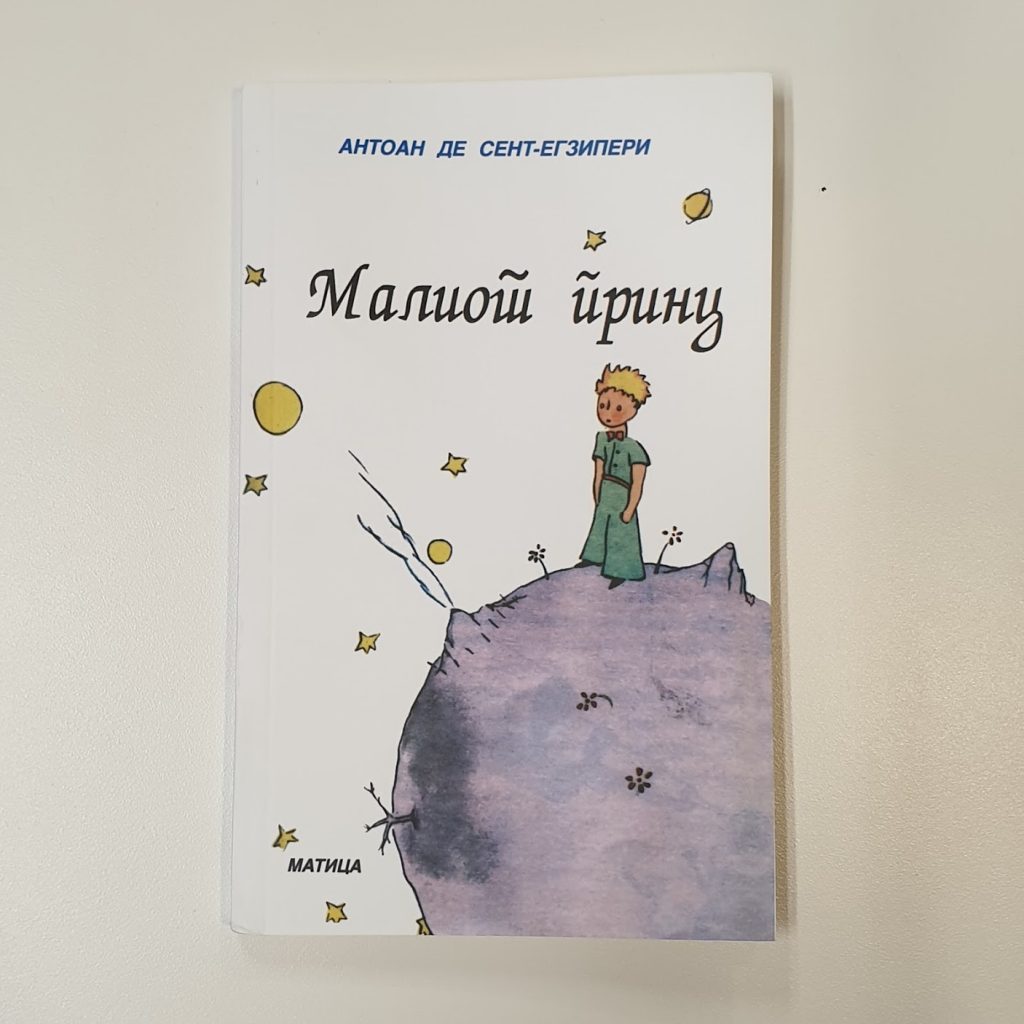
Малиот Принц / Maliot Prints — in Makedonski.
Macedonian (македонски јазик / Makedonski jazik) is a South Slavic language spoken primarily in the Republic of North Macedonia, where it serves as the sole official language. It is also spoken by minority communities in neighbouring countries such as Albania, Bulgaria, and Greece, as well as by a significant global diaspora. While it achieved its modern standardised form relatively recently in 1945, it is rooted in a rich historical continuum of Slavonic dialects that have been spoken in the Balkan Peninsula for over a millennium. Today, it is used in all aspects of public life, including education, government, and a thriving literary and media scene.
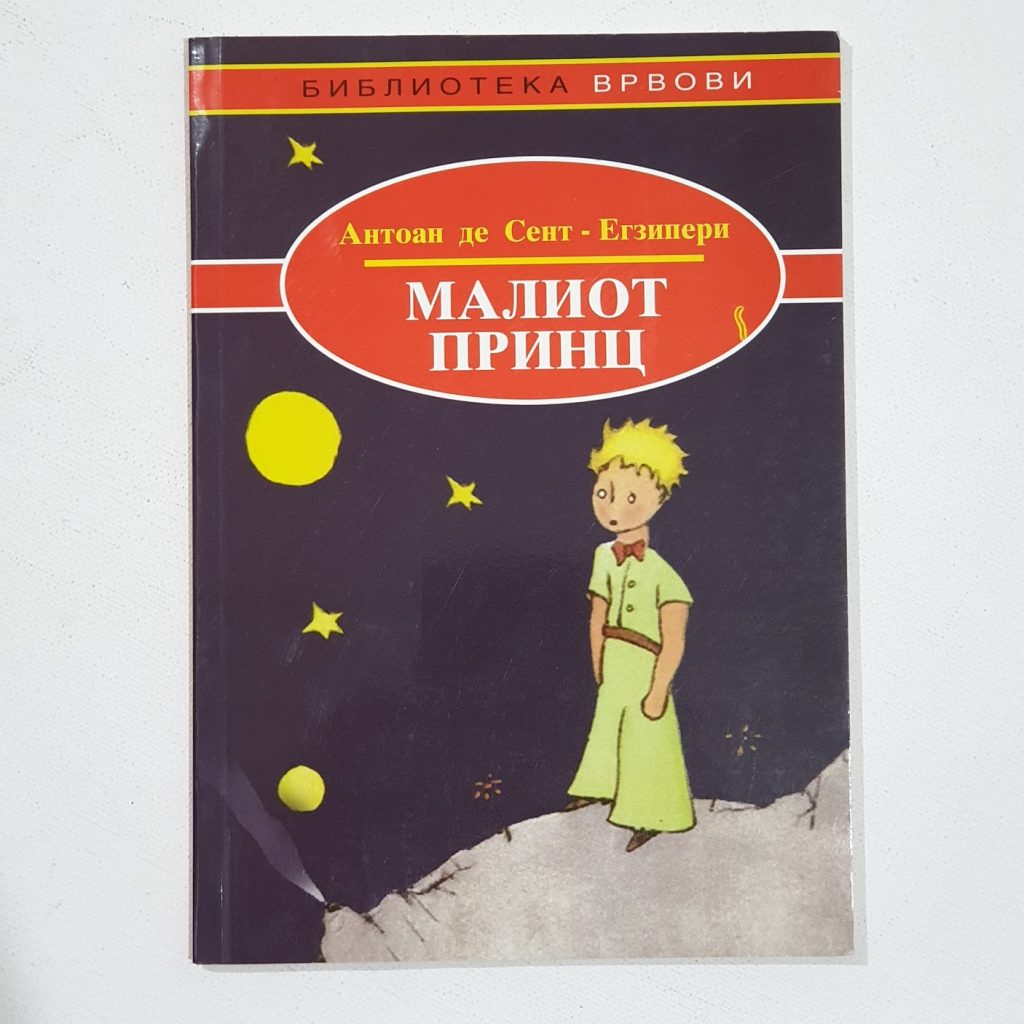
One of the most unique aspects of Macedonian is its position within the Balkan sprachbund, a group of languages that share structural features despite belonging to different branches. Unlike most other Slavic languages, such as Russian or Polish, Macedonian has almost entirely lost its noun case system and instead uses prepositions to indicate grammatical relationships. It also features a post-positive definite article, where the word for “the” is attached to the end of the noun (e.g., kniga for book, knigata for the book). Uniquely among Slavic tongues, it possesses a three-way definite article system to indicate the distance of an object from the speaker. Since 1945, the language has been written exclusively in the Macedonian Cyrillic alphabet, a phonemic script consisting of 31 letters that was adapted specifically to represent the unique sounds of the language.
Within the Slavic language family, Macedonian is most closely related to Bulgarian; the two are largely mutually intelligible and together form the Eastern group of South Slavic languages. It also shares a high degree of intelligibility with the Serbo-Croatian dialect continuum to its north. However, Macedonian is distinguished by its specific stress pattern, which in most dialects is fixed on the antepenultimate (third from last) syllable. This melodic rhythm sets it apart from the more variable stress found in its neighbours.
In the broader context of Southeastern Europe, Macedonian exists in a complex “linguistic crossroads.” In North Macedonia itself, it coexists with Albanian, which is also an official language at the state level, as well as Turkish, Romani, and Serbian. The language bears the lexical marks of this diverse history, containing numerous loanwords from Turkish, remnants of the Ottoman era, and more recent influences from French, German, and English. Despite being one of the smaller Slavic languages, Macedonian remains a vital pillar of identity and a unique specimen of linguistic evolution in the heart of the Balkans.