
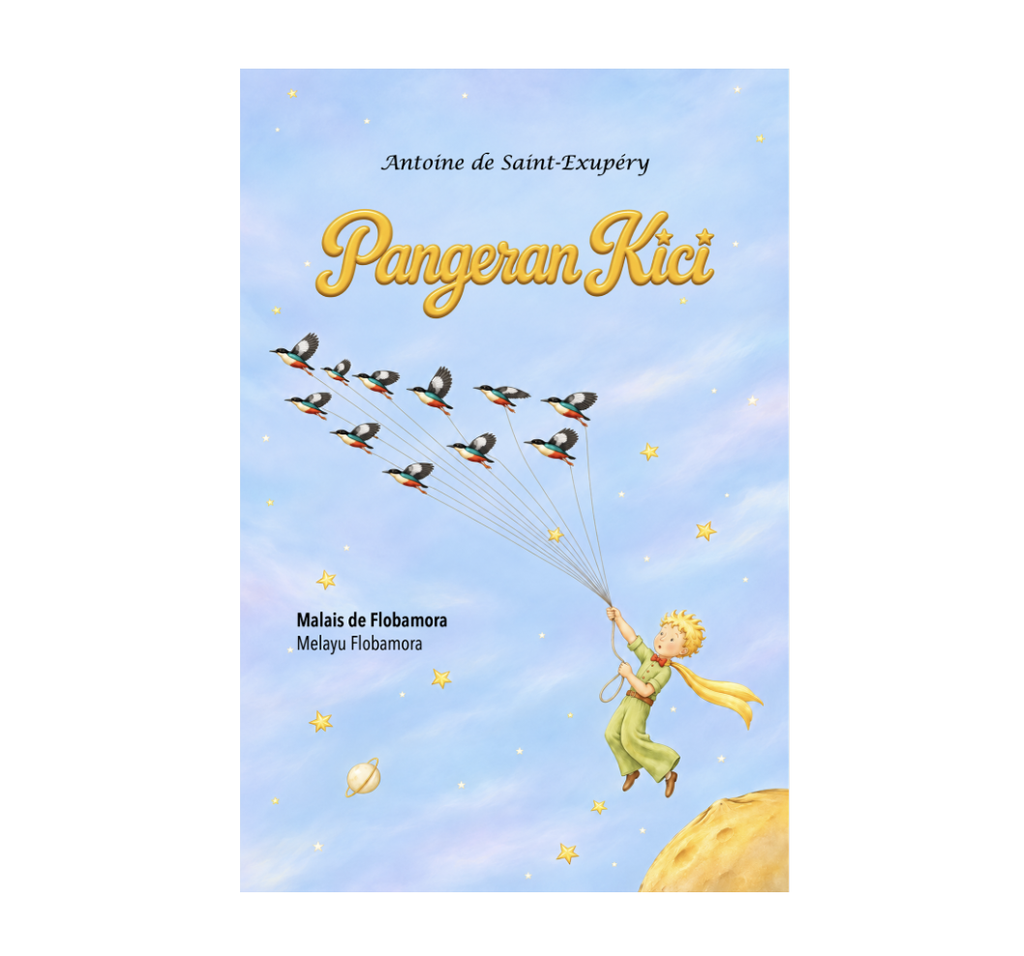
Pangeran Kici — in Melayu Flobamora.
Flobamora Malay (Melayu Flobamora) belongs to a scattered family of Malay based contact languages found across eastern Indonesia, cousins such as Moluccas and Manado Malay, all ultimately Austronesian and Malayic in origin yet each grown up quite independently as a trade tongue far from the Malay heartland of Sumatra. It is spoken in and around Kupang on the western tip of Timor, and today it serves proudly as the lingua franca binding together the whole Flobamora region, an affectionate local acronym for Flores, Sumba, Timor and Alor, a cluster of islands otherwise divided among dozens of mutually unintelligible indigenous languages.
Scholars trace Kupang Malay’s origins back before the seventeenth century, to an era when Timor itself became a genuine contact zone between rival colonial powers, the Portuguese first, then the Dutch East India Company, which made Kupang its own stronghold after pushing Portuguese influence further east across the island. Into this small but strategically vital port came traders, officials and soldiers speaking Portuguese and Dutch, mingling daily with the island’s own peoples, among them the Helong and Dawan communities native to the Kupang area, and out of that layered coexistence grew a simplified, flexible Malay that borrowed freely from every language around it rather than answering to any single one.
The result is a language full of charming, distinctive quirks, turning the schwa vowel into a so that standard Malay selamat becomes simply salamat, carrying an unusual stress system that can even distinguish otherwise identical words by stress alone, and building its grammar around colourful little markers such as the possessive particle pung and warmly inclusive pronouns like beta for I and katong for we, the latter borrowed with evident local pride into everyday Flobamora speech generally. Blending Malay syntax with patterns drawn from Helong and nearby Rote, Kupang Malay stands today less as any single ethnic group’s mother tongue and more as a genuinely shared regional voice, letting Florenese, Sumbanese, Timorese and Alorese neighbours alike speak quite naturally of themselves as katong, we, across a linguistic patchwork that might otherwise have kept them strangers.