
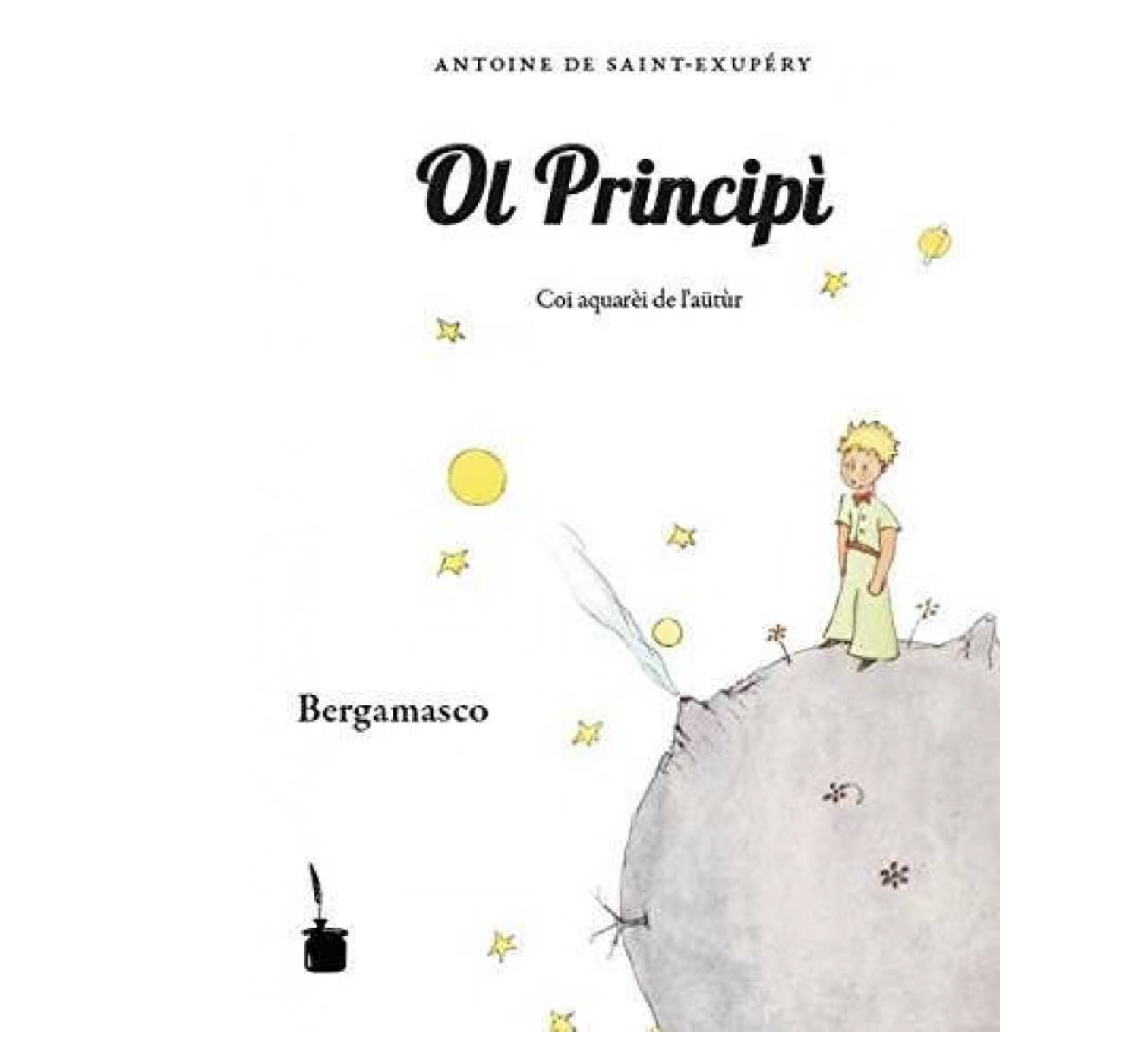
Bergamasco / Bergamasque, the speech of Bergamo and its surrounding province in Lombardy, belongs to Eastern Lombard, lombardo orientale, one of the two great branches of the Lombard language, lombardo, the other being Western Lombard, lombardo occidentale, centred on Milan and generally known as Milanese. Like its Gallo Italic cousins further east in Emilia and Romagna, Lombard descends from the speech of the Celtic Gaulish tribes who once occupied the Po valley, overlaid by Latin and later reshaped by centuries of contact with the Germanic Lombards themselves, whose name the whole region still bears, and it sits typologically closer in many respects to French and Occitan than to standard Italian, a fact that startles most people who assume every Italian dialect is simply Italian spoken a little differently. Bergamasque in particular has earned a reputation, even among other Lombard speakers, as one of the thornier members of the family, prized for a battery of clipped final vowels, heavy nasalisation, and consonant sounds that together produce a rhythm so different from standard Italian that a well worn joke across the rest of the country holds that Bergamo dialect is essentially unintelligible to outsiders, Italian included.
That linguistic distinctiveness sits alongside a rather unusual political history. From 1428 until the fall of the republic in 1797, Bergamo belonged not to the Lombard sphere dominated by Milan but to the mainland territories, the terraferma, of the Republic of Venice, making it, along with neighbouring Brescia, a genuinely odd case of a Lombard speaking city governed for the better part of four centuries by a Venetian speaking maritime power. The dialect itself never shifted towards Venetian under that long administration, remaining stubbornly Eastern Lombard in its bones, yet the political attachment to Venice gave Bergamo a distinct civic identity and architectural heritage, most visibly in the Venetian lion still carved into the walls of the old upper town, quite separate from the Habsburg and Spanish orbit that shaped Milan across the same centuries.
Bergamasque’s most delightful legacy, however, lies in the theatre rather than in politics. The stock character of Arlecchino, Harlequin, the mischievous, perpetually hungry servant of the commedia dell’arte, was traditionally conceived as a poor peasant from the mountainous upper reaches of the Bergamasque countryside, his speech in early scripts flavoured with genuine dialect words for rustic comic effect, while his cannier fellow servant Brighella was imagined as hailing from the wealthier lowland town below, a neat theatrical encoding of Bergamo’s own internal divide between the prosperous city and its poorer hinterland. The province lent its name too to the bergamasca, a lively Renaissance era dance and musical form associated with Bergamo’s folk traditions, echoes of which travelled remarkably far, surfacing centuries later in Paul Verlaine’s poetry and from there into Claude Debussy’s celebrated Suite bergamasque, home to Clair de lune, so that a fragment of Bergamo’s rustic dialect world ended up, quite by accident, humming inside one of the most famous piano pieces in the whole of French music.